
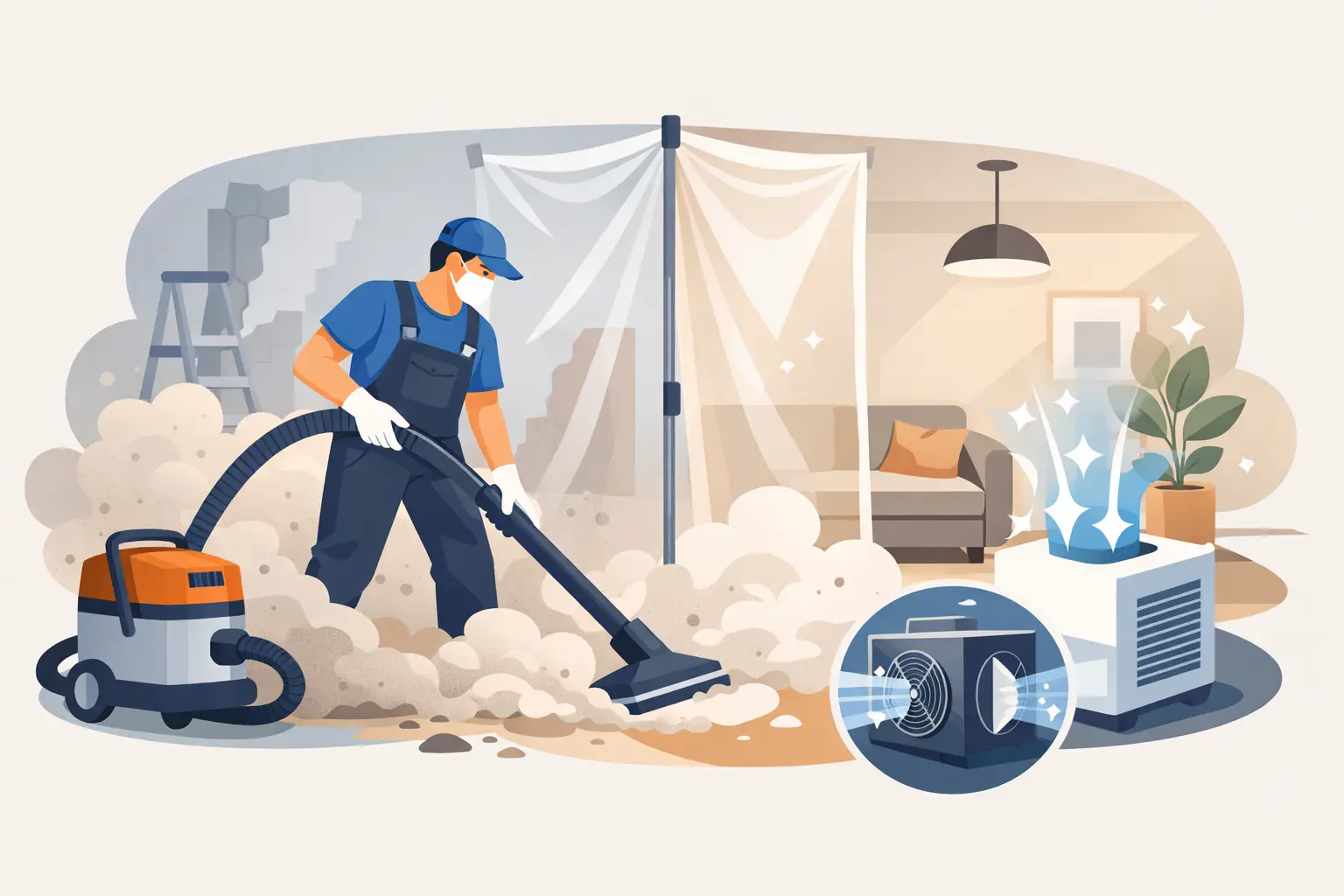
The work may be finished, the contractors may be gone, and yet the house still does not feel settled. Fine dust clings to baseboards, settles inside drawers, and leaves a dull film over the very finishes you just paid to improve. Post-renovation dust has a way of lingering far longer than expected, especially in homes with layered surfaces, textured materials, or delicate furnishings.
Knowing how to reduce dust after home renovations is less about one big cleanup and more about restoring order in the right sequence. If you rush straight to wiping visible surfaces, you often end up stirring particles back into the air and redistributing them across the home. The better approach is measured, protective, and thorough – the kind of care that treats your space as something worth preserving.
Why renovation dust keeps coming back
Construction dust is rarely just a light layer sitting in plain view. It travels through return vents, settles on vertical surfaces, hides in upholstery, and gathers in the small architectural details that make a home feel refined. Even minor projects like sanding trim, replacing flooring, or updating a bathroom can produce dust fine enough to stay airborne for hours.
That is why many homeowners clean once, feel hopeful, and then notice a fresh coating on the console table the next morning. In reality, what they are seeing is delayed settling. Until the air, floors, soft materials, and hard surfaces have all been addressed in order, dust tends to recirculate.
There is also a trade-off to consider. A fast cosmetic clean may make the room look finished sooner, but it can leave residue in vents, rugs, and fabric panels that continues to release particles over time. A slower, more methodical clean protects both air quality and the life of your finishes.
How to reduce dust after home renovations without spreading it further
The first rule is simple: start high and end low. Dust falls, so ceiling fans, vents, shelves, door frames, and wall ledges should be handled before floors. If you vacuum the floor first and then disturb upper surfaces, you are repeating work.
Use a vacuum with a sealed HEPA filter if possible. Standard vacuums can exhaust fine particles back into the room, which defeats the purpose. A soft-brush attachment is ideal for trim, vent covers, window casings, and other detailed areas where abrasive cleaning could mark the finish.
Dry dusting is where many homes get into trouble. Feather dusters and dry cloths often send particles airborne rather than capturing them. A lightly damp microfiber cloth is a safer choice for painted surfaces, stone, sealed wood, and cabinetry. The cloth should be only slightly damp, never wet enough to soak seams or edges.
Work in zones instead of trying to clean the whole house at once. Complete one room fully before moving to the next, and keep doors closed where possible. That containment makes a noticeable difference, especially in larger homes where open-plan layouts allow dust to travel freely.
Start with air, not just surfaces
If the air still holds particles, your cleanup will feel unfinished no matter how much wiping you do. Replace HVAC filters after the renovation, and check them again sooner than usual. Renovation debris can clog a fresh filter quickly, particularly after drywall sanding or flooring work.
If your system has return vents near the work zone, have those vent covers removed and cleaned carefully. In some cases, the surrounding ductwork may also need professional attention. It depends on the scale of the renovation. A single-room cosmetic update may not justify full duct cleaning, but larger projects often leave enough residue in the system to keep dust circulating.
Portable air purifiers can help in the days after cleanup, especially in bedrooms, nurseries, and home offices where comfort matters most. They are not a substitute for proper cleaning, but they do support faster settling and cleaner air while the home returns to normal.
Opening windows can help, though only when outdoor conditions cooperate. On a dry, windy day or during high pollen season, open windows may introduce more particles than they remove. Good ventilation is useful, but it should be a considered decision, not an automatic one.
Protect the finishes you just invested in
Post-renovation cleaning is not only about removing dust. It is also about doing so without scratching, dulling, or staining the surfaces that were just installed or refreshed. This is where a more careful standard matters.
New wood floors, natural stone, polished fixtures, and custom millwork are particularly vulnerable after renovation. Grit underfoot can scratch flooring. Harsh all-purpose sprays can haze stone or damage specialty coatings. Even enthusiastic scrubbing with the wrong cloth can leave micro-abrasions on glossy cabinetry or metal finishes.
For that reason, gentleness is not a luxury. It is part of proper care. Vacuum first to lift abrasive particles, then wipe with products appropriate to the material. If you are unsure what was installed, ask your contractor or supplier before using anything acidic, oily, or heavily fragranced.
Soft furnishings deserve the same level of attention. Dust settles into drapery folds, upholstered headboards, dining chairs, and rugs, where it is less visible but still very much present. A full reset often requires detailed vacuuming with upholstery attachments and, in some cases, fabric-safe professional treatment for more sensitive materials.
The rooms that usually need more attention
Kitchens and bathrooms often collect more fine dust than homeowners expect because they contain so many horizontal ledges, corners, and hard finishes that show residue clearly. Cabinet interiors, drawer boxes, under-sink areas, and the tops of appliances are easy to miss.
Bedrooms can also hold onto dust longer than expected due to textiles. Bedding, mattresses, curtains, and closet shelving all tend to catch particles. If renovation happened nearby, laundering linens and vacuuming mattresses and closet floors can make the room feel genuinely restored rather than merely tidy.
Entryways and hallways matter too. They act like transfer zones, carrying construction dust from one area into another. If these spaces are skipped, the rest of the home can be recontaminated by foot traffic.
When a standard clean is not enough
There is a difference between regular housekeeping and a builders clean. After renovation, the home often needs the latter. This means detail-level attention to trim lines, tracks, fittings, vents, internal glass, switch plates, and residue removal from surfaces that appear clean at first glance.
That level of cleaning is especially valuable in larger homes, homes with custom finishes, and properties preparing for handover, sale, or immediate move-in. It is also the right choice when time is limited. Busy families and professionals often do not have the hours required to clean slowly enough to do it properly, and rushing the job usually costs more in repeated effort.
For homeowners in Adelaide who want that process handled with finish-protecting care, Rosewood & Luster offers builders cleans designed to restore calm after the noise of construction. The value is not only the visible result. It is the confidence that detailed surfaces, sensitive materials, and newly completed rooms are being treated with precision.
How to keep dust from settling again
Once the major cleanup is complete, a few small habits help prevent the last traces from lingering. Keep HVAC filters on a shorter replacement cycle for the next month or two. Vacuum soft surfaces more often than usual. Wipe hard surfaces with microfiber rather than dry paper towels, which tend to push dust around.
Shoes-off habits help if work crews have been moving in and out. So does laundering throws, cushion covers, and other nearby textiles that may have absorbed fine particles during the project. If you have pets, regular grooming can help reduce the way dust catches in fur and moves from room to room.
Most of all, resist the urge to declare the job finished too early. Renovation dust clears in stages. A thoughtful second pass a few days later often makes the biggest difference, because by then the last suspended particles have finally settled.
A renovated home should feel fresh, calm, and ready to be enjoyed. When the dust is handled with care, that new chapter starts the way it should – clean air, protected finishes, and rooms that feel truly complete.
Leave a Reply