
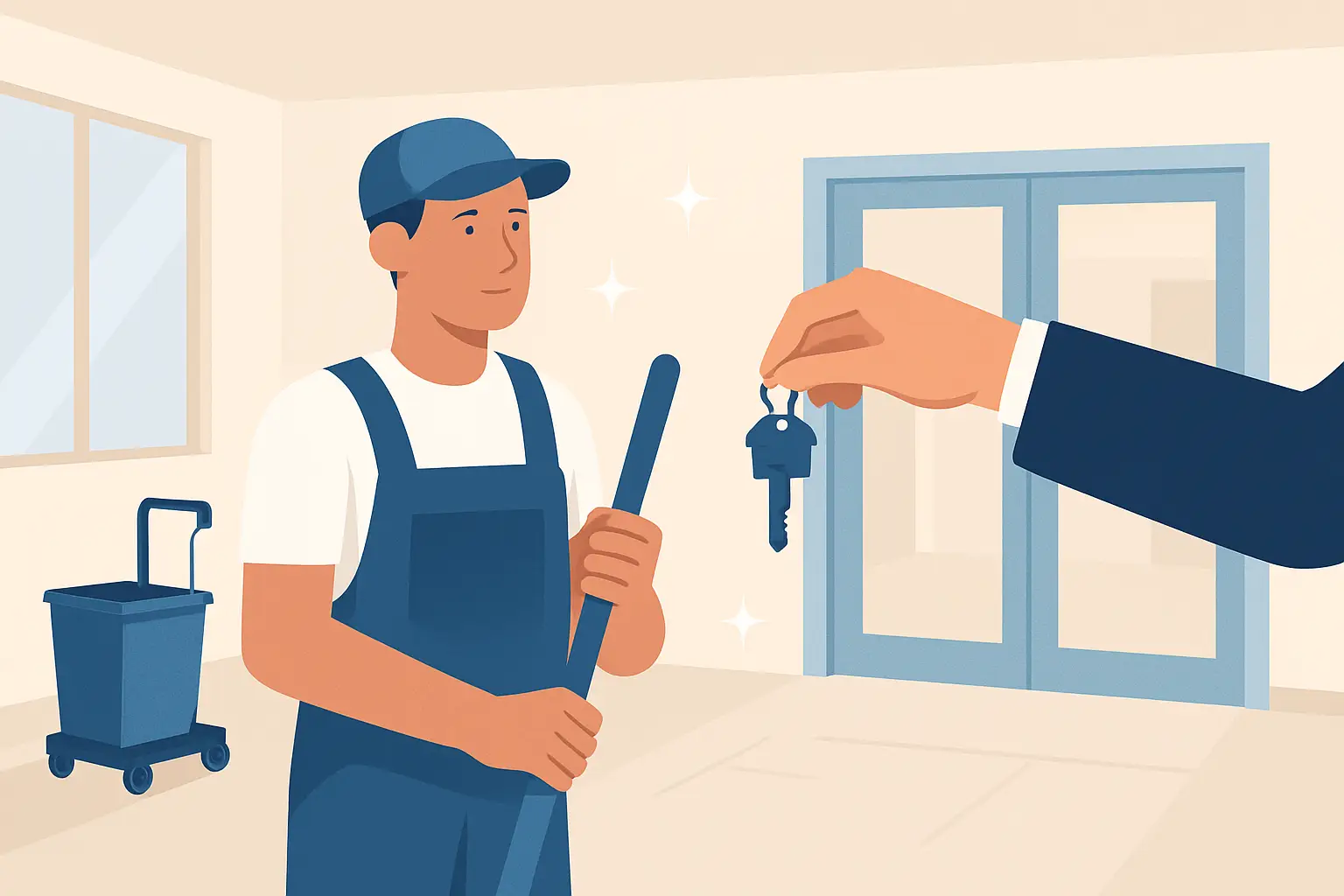
There is a moment every build reaches – the fixtures are in, the paint has dried, the cabinetry closes with that satisfying soft touch – and yet the home still does not feel finished. Fine dust sits in the window tracks. A haze clings to the glass. Adhesive residue catches the light on new tile.
That is exactly where a final builders clean service belongs. Not as a quick tidy, and not as an afterthought, but as the careful bridge between “construction complete” and “move-in calm.”
What a final builders clean service really is
A final builders clean service is the last, detail-driven clean performed after construction or renovation is complete and trades are off site. The goal is not just to make surfaces look acceptable. The goal is to make the space feel new, breathe cleanly, and present at a standard that holds up to handover, photography, inspections, and real life.
This is a different discipline than routine housekeeping. Post-construction soils behave differently: ultra-fine drywall dust that migrates into drawers, gritty debris that can scratch finishes if handled poorly, and residues like grout haze, silicone smears, protective film glue, and paint flecks that require the right method and patience.
A truly premium final clean is, at its core, stewardship. It assumes every surface is an investment and treats it accordingly.
Why “final” is not the same as “rough” or “sparkle”
Builders cleans are often described in phases, and the language can get messy. Some teams call everything a “builders clean,” while others separate rough, intermediate, and final.
A rough clean usually happens while work is still underway. It focuses on removing bulk debris and making the site workable. It is functional, not delicate.
A final clean is slower, more precise, and more protective. It is performed when you can safely wet clean floors, wipe cabinetry without fresh dust landing again, and polish surfaces without trades tracking in grit.
Some people use “sparkle clean” to mean final. That can be accurate – as long as “sparkle” is not code for rushing through the obvious areas while ignoring the quiet details that ruin the experience once you move in.
What you are really paying for: inspection-level detail without damage
The best final builders clean service is as much about what does not happen as what does.
It means dust is removed without being redistributed. It means new finishes are not dulled by harsh chemicals. It means stone is not etched, stainless steel is not scratched, and matte fixtures are not polished into shiny patches.
It also means the team understands sequence. Cleaning a build is choreography: start high, work down, dry-remove grit before wet wiping, and finish with controlled detailing so the home stays clean once it is reset.
The high-impact areas that separate “clean” from “handover-ready”
Most owners notice floors, counters, bathrooms, and glass first. Those matter. But final-clean excellence shows up in the places that are easy to miss and impossible to ignore later.
Glass, tracks, and frames
New windows and sliders collect a combination of dust, paint overspray, adhesive residue, and construction fingerprints. It is not enough to wipe the pane. Tracks and frames need detail work so the windows operate smoothly and the edges do not shed dust every time they move.
Cabinetry – inside the calm
Cabinet exteriors might look perfect while the inside tells a different story. Sawdust and drywall dust love to settle on shelf pins, hinges, drawer runners, and the top lip of interior panels. A final clean should address interiors as agreed in the scope, because nothing breaks the “new home” feeling faster than unpacking into dusty drawers.
Bathrooms: grout haze, polish marks, and fixture care
Bathrooms in new builds often have a fine film left from tiling, grouting, and silicone work. Grout haze and light residue can make tile look flat and dull. The right approach depends on the surface type and how cured the materials are. There is a difference between safely refining a finish and aggressively scrubbing it into premature wear.
Floors: beautiful, vulnerable, and easy to scratch
Post-construction floors are at their most vulnerable because grit is everywhere. The wrong vacuum head, dragging a bucket, or wet-mopping dust without removing grit first can create micro-scratches and a dull cast that should never exist on a brand-new surface.
A premium service treats floors like a finishing craft: remove debris, control grit, then refine the surface with the correct products and tools for that material.
Vents, ledges, and “floating” dust
If your final clean does not address the places dust hides, it will keep returning. Ledges, baseboard tops, door headers, vent covers, and closet shelving can release fine dust into the air for days. This is where method matters – careful dust removal, not just fragrance and shine.
What affects cost and timing (and why it depends)
Pricing for a final builders clean service cannot be truly accurate without understanding the build and the expectations. Two homes of the same size can require very different levels of labor.
The biggest drivers are the condition at completion (how much dust and residue is present), the number of wet areas and windows, the detail level required (inside cabinets, inside wardrobes, detailed track work), and the timeline (a calm schedule versus a compressed handover).
It also depends on the materials. Delicate surfaces, specialty stone, matte fixtures, natural timber, and high-gloss cabinetry often require slower, finish-protecting methods. That is not a downside. It is the cost of keeping “new” looking new.
If you are comparing quotes, be careful with simple square-foot pricing that does not specify scope. “Clean the bathrooms” can mean a wipe-down, or it can mean residue removal, fixture detailing, and careful finishing that makes tile and glass look like they were installed yesterday.
How to choose the right team (without learning the hard way)
A final clean is not the place for guesswork. The easiest way to protect your home is to choose a team that can explain process, not just promise results.
Ask what their sequence is and how they prevent cross-contamination. Ask how they handle glass scraping, adhesive removal, and grout haze without damaging surfaces. Ask what they need from the builder beforehand, because the best outcomes often require coordination.
You also want clarity on what “final” includes. If you expect inside cabinetry, interior windows, track detailing, spot removal on walls, and garage sweeping, make sure it is documented. Premium service is not vague – it is precise.
Finally, look for a team that treats your home like an asset, not a checklist. The difference is visible in the finish.
A sensible pre-handover checklist that saves everyone time
A final builders clean service goes best when the site is truly ready. If trades are still sanding, cutting, or installing, the home will re-dust quickly and you end up paying twice.
Before scheduling, confirm that major works are complete, protective films are either removed or clearly assigned, and all fixtures are installed. Make sure the power and water are on. If possible, ask the builder to remove leftover materials and dispose of bulk debris first.
This is not about being demanding. It is about letting the final clean do what it is meant to do – deliver a home that feels settled.
What “premium” looks like after the team leaves
When a final clean is done at a heritage-quality level, the home does not just look clean in good lighting. It holds up.
You should be able to walk barefoot without picking up grit. Open a drawer without seeing dust gather at the corners. Run a finger along a window track without collecting powder. Stand in the bathroom and see tile and chrome with crisp clarity, not smears and haze.
And emotionally, it should feel like exhale. The build phase ends, and the living phase begins.
Where Rosewood & Luster fits (if you want that finish-protecting mindset)
If you are the kind of homeowner, property manager, or builder who wants the handover to feel elevated – not merely acceptable – a detail-led team makes all the difference. Rosewood & Luster approaches builders cleans as stewardship: careful sequencing, material-respectful methods, and the kind of precision that honors the investment you have just made.
The right final clean is not loud. It does not announce itself with heavy fragrance or shortcuts. It simply lets the home look and feel the way it was always meant to.
A helpful closing thought: schedule your final clean for the moment the site goes quiet – when the last tool leaves, the dust stops falling, and the home is finally ready to be cared for, not worked on.
Leave a Reply