The first sign something needed to change was the kitchen floor.

Not because it was dirty in the obvious way. It was the kind of “mostly fine” that still isn’t safe – a thin film that made socks slide, a little grit that traveled from entryway to hallway, and a sticky patch near the trash can that never seemed to lift completely. For one Adelaide participant living with reduced mobility and sensory sensitivity, that floor wasn’t a minor annoyance. It was a daily stressor, and on a bad day, a fall risk.

This is a case study NDIS in home cleaning support told the way it actually happens: slowly, through trust, through routines that hold, and through small details that change how a home feels.

The participant and the real goal

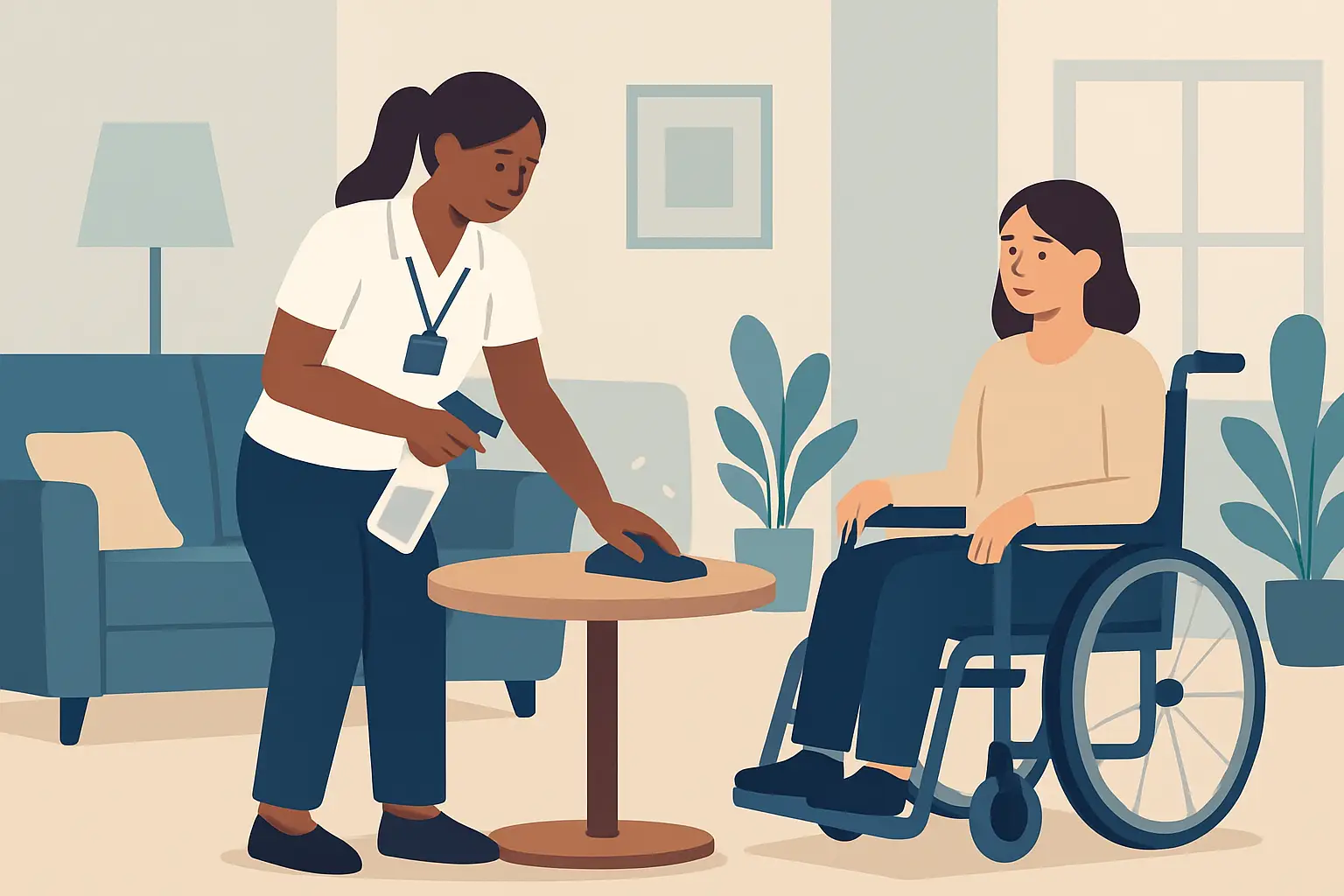
The participant (we’ll call her Mia) lived alone and received informal support from a family member who visited on weekends. Mia’s NDIS plan included supports that could help maintain a safe, functional home environment. Her needs were not unusual, but they were specific.

Mobility limitations meant bending, lifting, and long periods standing were difficult. Sensory sensitivity meant strong fragrances and harsh chemical smells could trigger headaches and anxiety. And like many people, Mia had learned to manage by “putting up with” what she couldn’t keep on top of.

The goal wasn’t a picture-perfect home staged for a photo. It was dignity and steadiness.

A clean home that stayed clean enough between visits.

A kitchen that didn’t feel like a problem waiting to happen.

A bathroom that was hygienic without being stripped by aggressive products.

And just as importantly, a service that arrived when it said it would, handled belongings respectfully, and didn’t treat support work like a quick checklist.

The starting point: what “clean” looked like before

Before cleaning support was put in place, Mia’s home was being managed in bursts. Her family member would do a bigger clean every couple of weeks, focusing on what was most visible. The problem with burst-cleaning is that it often skips the quiet places where safety and hygiene build up: the base of the toilet, the edges of flooring, the handles and switches, the texture of shower grout, the film on a cooktop.

Mia also avoided certain tasks altogether. Vacuuming aggravated her shoulder, and mopping made her feel unsteady. Bathroom cleaning was the most stressful, partly due to bending and partly due to the smell of typical products.

Over time, that created a cycle:

If the home felt harder to manage, Mia spent more time in one or two rooms.

If she spent more time in fewer spaces, those spaces wore faster.

If they wore faster, cleaning became even more physically and emotionally costly.

The right in-home cleaning support breaks that cycle by making the baseline manageable again.

Designing the service: tailored, not generic

A support coordinator was involved from the start, and expectations were set clearly. The cleaning plan needed to align with what the NDIS would reasonably consider related to daily living, while still being practical and meaningful for Mia.

We began with a short in-home assessment focused on three things: safety, sensory comfort, and maintainability.

Safety meant prioritizing floors, pathways, and bathrooms. Sensory comfort meant unscented or lightly scented products, minimal lingering odors, and avoiding harsh aerosol sprays. Maintainability meant a routine that didn’t just “reset” the home, but made it easier for Mia to keep things steady between visits.

The routine was set at weekly. Fortnightly was an option, but weekly support reduced the swing between “fine” and “overwhelming,” and it kept the bathroom and kitchen at a consistent standard.

What we cleaned and why

Instead of treating every room the same, the service was weighted toward impact:

The kitchen and bathroom were non-negotiable every visit because hygiene and slip risk live there.

Entryway and hallway floors were treated as safety zones – vacuumed thoroughly, then mopped with a residue-conscious method to prevent slickness.

Touchpoints (handles, switches, remote controls, high-use surfaces) were cleaned with gentle, low-odor products to reduce grime buildup without introducing sharp chemical smells.

Bedroom cleaning stayed light and respectful. Mia preferred minimal movement of personal items, so dusting and floors were handled with care, and bedding was not touched unless requested.

This is where premium thinking matters in a support setting. The home isn’t a blank canvas. It’s someone’s private space, with preferences, routines, and boundaries.

The first two visits: building trust through small decisions

On the first visit, the priority wasn’t speed. It was establishing a standard without overwhelming Mia or altering her environment in ways that felt intrusive.

We cleaned methodically, explained what we were using, and checked in before moving items that mattered. We also documented what worked and what didn’t.

The biggest adjustment came from the floor care. Many people assume “more product” equals cleaner floors. But residue is often the hidden culprit behind that slightly sticky feeling. We shifted to a finish-protecting approach: thorough dry vacuuming first, then a controlled damp mop that lifted grime without leaving a film.

The bathroom required a similar mindset. Strong acids and heavy fragrance can make a bathroom smell “clean,” but they can also irritate and degrade finishes over time. We focused on sanitation and scale control while staying mindful of ventilation and scent.

By the second visit, Mia did something that mattered: she stopped hovering.

She sat in the living room while the kitchen was cleaned. That’s not a small win. That’s the moment in-home support becomes support, not supervision.

What changed after four weeks

The measurable outcomes were straightforward.

Floors stayed consistently safe underfoot, with less grit tracked through living spaces.

The bathroom remained hygienic without harsh odors.

The kitchen surfaces felt clean to the touch – not just visually presentable.

But the more meaningful changes were behavioral.

Mia began using her kitchen more often because it no longer felt like it needed “a big effort” before she could cook. She also reported less stress before her family member visited because she wasn’t worried about being judged for mess she physically couldn’t manage.

Weekly cleaning support didn’t just change the home. It changed the emotional weather inside it.

The trade-offs: what this support did not include

A high-quality service also needs boundaries, especially in a funded context.

This routine did not include deep restoration work every week. For example, detailed grout restoration, heavy scale removal, or moving large furniture would be planned as occasional add-ons if appropriate and requested. The weekly visits were designed to maintain a steady baseline.

We also avoided introducing too many changes at once. Reorganizing cupboards, shifting furniture layouts, or “tidying” personal belongings can feel helpful to a cleaner and upsetting to a participant. In Mia’s case, we focused on cleaning, not rearranging.

It depends on the person. Some participants want a cleaner to reset and organize. Others want a cleaner to preserve order exactly as it is. The right approach is the one that respects autonomy.

Coordination and reliability: the quiet backbone

The best routine is useless if it’s inconsistent.

For Mia, reliability was part of safety. Knowing the day and time reduced anxiety. It also meant she could plan supports around it without feeling like she had to brace for last-minute changes.

Communication with the coordinator stayed simple: confirmation of the routine, quick notes when needed, and clear reporting if anything in the home looked like it might become a risk (for example, a loosening bath mat or an area of flooring that seemed to trap moisture).

For NDIS participants, coordinators, and families, the “soft skills” are not extras. Respectful entry, clear consent, predictable timing, and calm presence are part of what makes in-home support sustainable.

Why heritage-quality cleaning fits NDIS support

There’s a misconception that disability-related cleaning support should be basic. The truth is the opposite.

When someone’s energy, mobility, or sensory tolerance is limited, cleaning needs to be precise. Not fussy – precise.

Residue matters.

Slip risk matters.

Product choice matters.

How you handle surfaces and finishes matters, because replacing damaged fixtures or worn coatings is expensive and disruptive.

A stewardship mindset treats the home as an asset worth protecting and a sanctuary worth preserving. That’s the same philosophy behind premium residential care, and it’s exactly what makes in-home support feel dignified instead of transactional.

At Rosewood & Luster, that’s the standard we bring into NDIS-supported homes: detail-driven care that protects finishes, respects boundaries, and holds a consistent baseline week after week.

If you’re arranging NDIS in-home cleaning support

If you’re a participant, family member, or coordinator trying to set this up, the most helpful first step is clarity on what “good” looks like.

Is the priority fall prevention and clear walkways? Is it bathroom hygiene without strong odors? Is it keeping a kitchen functional so meals feel doable? Those answers shape the routine more than the size of the home.

Also be honest about the rhythm that will actually help. Weekly might feel like a luxury on paper, but for many households it’s the frequency that prevents the swing into overwhelm. Fortnightly can work well when the baseline is already stable or when the participant has other supports that bridge the gap.

A well-built cleaning routine should feel like the home is quietly held. Not constantly reset, not constantly managed – just cared for, with intention.

A home doesn’t need to be perfect to be safe and calming. It needs to be consistently looked after, in a way that makes everyday life feel lighter.

  • Adelaide cleaning service cleaning clear glass wall near sofa
  • Refreshed modern living space, arranged and maintained by Rosewood & Luster
  • Mopping a pristine wooden floor with premium finish
  • Adelaide based mobile car detailing
  • Inner city garden care
  • Rustic outdoor patio with wooden furniture

NDIS In-Home Cleaning Support Case Study

NDIS In-Home Cleaning Support Case Study

The first sign something needed to change was the kitchen floor.

Not because it was dirty in the obvious way. It was the kind of “mostly fine” that still isn’t safe – a thin film that made socks slide, a little grit that traveled from entryway to hallway, and a sticky patch near the trash can that never seemed to lift completely. For one Adelaide participant living with reduced mobility and sensory sensitivity, that floor wasn’t a minor annoyance. It was a daily stressor, and on a bad day, a fall risk.

This is a case study NDIS in home cleaning support told the way it actually happens: slowly, through trust, through routines that hold, and through small details that change how a home feels.

The participant and the real goal

The participant (we’ll call her Mia) lived alone and received informal support from a family member who visited on weekends. Mia’s NDIS plan included supports that could help maintain a safe, functional home environment. Her needs were not unusual, but they were specific.

Mobility limitations meant bending, lifting, and long periods standing were difficult. Sensory sensitivity meant strong fragrances and harsh chemical smells could trigger headaches and anxiety. And like many people, Mia had learned to manage by “putting up with” what she couldn’t keep on top of.

The goal wasn’t a picture-perfect home staged for a photo. It was dignity and steadiness.

A clean home that stayed clean enough between visits.

A kitchen that didn’t feel like a problem waiting to happen.

A bathroom that was hygienic without being stripped by aggressive products.

And just as importantly, a service that arrived when it said it would, handled belongings respectfully, and didn’t treat support work like a quick checklist.

The starting point: what “clean” looked like before

Before cleaning support was put in place, Mia’s home was being managed in bursts. Her family member would do a bigger clean every couple of weeks, focusing on what was most visible. The problem with burst-cleaning is that it often skips the quiet places where safety and hygiene build up: the base of the toilet, the edges of flooring, the handles and switches, the texture of shower grout, the film on a cooktop.

Mia also avoided certain tasks altogether. Vacuuming aggravated her shoulder, and mopping made her feel unsteady. Bathroom cleaning was the most stressful, partly due to bending and partly due to the smell of typical products.

Over time, that created a cycle:

If the home felt harder to manage, Mia spent more time in one or two rooms.

If she spent more time in fewer spaces, those spaces wore faster.

If they wore faster, cleaning became even more physically and emotionally costly.

The right in-home cleaning support breaks that cycle by making the baseline manageable again.

Designing the service: tailored, not generic

A support coordinator was involved from the start, and expectations were set clearly. The cleaning plan needed to align with what the NDIS would reasonably consider related to daily living, while still being practical and meaningful for Mia.

We began with a short in-home assessment focused on three things: safety, sensory comfort, and maintainability.

Safety meant prioritizing floors, pathways, and bathrooms. Sensory comfort meant unscented or lightly scented products, minimal lingering odors, and avoiding harsh aerosol sprays. Maintainability meant a routine that didn’t just “reset” the home, but made it easier for Mia to keep things steady between visits.

The routine was set at weekly. Fortnightly was an option, but weekly support reduced the swing between “fine” and “overwhelming,” and it kept the bathroom and kitchen at a consistent standard.

What we cleaned and why

Instead of treating every room the same, the service was weighted toward impact:

The kitchen and bathroom were non-negotiable every visit because hygiene and slip risk live there.

Entryway and hallway floors were treated as safety zones – vacuumed thoroughly, then mopped with a residue-conscious method to prevent slickness.

Touchpoints (handles, switches, remote controls, high-use surfaces) were cleaned with gentle, low-odor products to reduce grime buildup without introducing sharp chemical smells.

Bedroom cleaning stayed light and respectful. Mia preferred minimal movement of personal items, so dusting and floors were handled with care, and bedding was not touched unless requested.

This is where premium thinking matters in a support setting. The home isn’t a blank canvas. It’s someone’s private space, with preferences, routines, and boundaries.

The first two visits: building trust through small decisions

On the first visit, the priority wasn’t speed. It was establishing a standard without overwhelming Mia or altering her environment in ways that felt intrusive.

We cleaned methodically, explained what we were using, and checked in before moving items that mattered. We also documented what worked and what didn’t.

The biggest adjustment came from the floor care. Many people assume “more product” equals cleaner floors. But residue is often the hidden culprit behind that slightly sticky feeling. We shifted to a finish-protecting approach: thorough dry vacuuming first, then a controlled damp mop that lifted grime without leaving a film.

The bathroom required a similar mindset. Strong acids and heavy fragrance can make a bathroom smell “clean,” but they can also irritate and degrade finishes over time. We focused on sanitation and scale control while staying mindful of ventilation and scent.

By the second visit, Mia did something that mattered: she stopped hovering.

She sat in the living room while the kitchen was cleaned. That’s not a small win. That’s the moment in-home support becomes support, not supervision.

What changed after four weeks

The measurable outcomes were straightforward.

Floors stayed consistently safe underfoot, with less grit tracked through living spaces.

The bathroom remained hygienic without harsh odors.

The kitchen surfaces felt clean to the touch – not just visually presentable.

But the more meaningful changes were behavioral.

Mia began using her kitchen more often because it no longer felt like it needed “a big effort” before she could cook. She also reported less stress before her family member visited because she wasn’t worried about being judged for mess she physically couldn’t manage.

Weekly cleaning support didn’t just change the home. It changed the emotional weather inside it.

The trade-offs: what this support did not include

A high-quality service also needs boundaries, especially in a funded context.

This routine did not include deep restoration work every week. For example, detailed grout restoration, heavy scale removal, or moving large furniture would be planned as occasional add-ons if appropriate and requested. The weekly visits were designed to maintain a steady baseline.

We also avoided introducing too many changes at once. Reorganizing cupboards, shifting furniture layouts, or “tidying” personal belongings can feel helpful to a cleaner and upsetting to a participant. In Mia’s case, we focused on cleaning, not rearranging.

It depends on the person. Some participants want a cleaner to reset and organize. Others want a cleaner to preserve order exactly as it is. The right approach is the one that respects autonomy.

Coordination and reliability: the quiet backbone

The best routine is useless if it’s inconsistent.

For Mia, reliability was part of safety. Knowing the day and time reduced anxiety. It also meant she could plan supports around it without feeling like she had to brace for last-minute changes.

Communication with the coordinator stayed simple: confirmation of the routine, quick notes when needed, and clear reporting if anything in the home looked like it might become a risk (for example, a loosening bath mat or an area of flooring that seemed to trap moisture).

For NDIS participants, coordinators, and families, the “soft skills” are not extras. Respectful entry, clear consent, predictable timing, and calm presence are part of what makes in-home support sustainable.

Why heritage-quality cleaning fits NDIS support

There’s a misconception that disability-related cleaning support should be basic. The truth is the opposite.

When someone’s energy, mobility, or sensory tolerance is limited, cleaning needs to be precise. Not fussy – precise.

Residue matters.

Slip risk matters.

Product choice matters.

How you handle surfaces and finishes matters, because replacing damaged fixtures or worn coatings is expensive and disruptive.

A stewardship mindset treats the home as an asset worth protecting and a sanctuary worth preserving. That’s the same philosophy behind premium residential care, and it’s exactly what makes in-home support feel dignified instead of transactional.

At Rosewood & Luster, that’s the standard we bring into NDIS-supported homes: detail-driven care that protects finishes, respects boundaries, and holds a consistent baseline week after week.

If you’re arranging NDIS in-home cleaning support

If you’re a participant, family member, or coordinator trying to set this up, the most helpful first step is clarity on what “good” looks like.

Is the priority fall prevention and clear walkways? Is it bathroom hygiene without strong odors? Is it keeping a kitchen functional so meals feel doable? Those answers shape the routine more than the size of the home.

Also be honest about the rhythm that will actually help. Weekly might feel like a luxury on paper, but for many households it’s the frequency that prevents the swing into overwhelm. Fortnightly can work well when the baseline is already stable or when the participant has other supports that bridge the gap.

A well-built cleaning routine should feel like the home is quietly held. Not constantly reset, not constantly managed – just cared for, with intention.

A home doesn’t need to be perfect to be safe and calming. It needs to be consistently looked after, in a way that makes everyday life feel lighter.

Leave a Reply

Discover more from Rosewood & Luster

Subscribe now to keep reading and get access to the full archive.

Continue reading