
A heritage window tells on its caretaker. You can see it in the corners where moisture lingers, in the fine line where paint meets glass, and in the timber itself – either calm and well kept, or tired from harsh cleaning and rushed upkeep. That is why window cleaning for heritage timber frames is less about making glass sparkle for a day and more about preserving the finish, structure, and character of the window as a whole.
Modern windows can tolerate a more direct approach. Heritage timber cannot. Older joinery often carries softer paint systems, delicate putty lines, hand-finished profiles, and timber that has already spent decades responding to sun, rain, and movement. Clean it too aggressively and you may not notice the damage immediately. But over time, dulling, swelling, lifted paint, and water staining begin to show.
Why window cleaning for heritage timber frames needs a different standard
The mistake most people make is treating the glass and the frame as separate jobs. On a heritage window, they are connected. Water that sits at the sill can travel into joints. Strong chemicals applied to glass can creep onto painted edges. Even a rough cloth can wear down vulnerable finish points on glazing bars and corners.
That is why the standard has to be higher. The goal is not speed. The goal is controlled, finish-protecting care. A premium result comes from restraint as much as effort – using the least aggressive method that still gives a clear, polished finish.
This matters even more in period homes where the windows are part of the property’s visual identity. Timber frames shape the feel of a facade and the quality of light inside the room. When they are maintained properly, the entire home feels calmer and more refined. When they are neglected, even beautiful architecture can look unsettled.
What makes heritage timber frames vulnerable
Age is only part of the story. Many heritage frames remain sound because they were built from quality timber and detailed with care. But sound construction does not make them indestructible.
Moisture is usually the biggest threat. During cleaning, excess water can collect in joints, sit along the lower rail, or seep into small cracks in paint. Repeated wetting and slow drying can encourage swelling, staining, and premature coating failure. In shaded areas, mildew can also take hold.
The finish itself can be sensitive. Older painted surfaces may be chalky or brittle. Clear-coated timber may have uneven UV wear, where one section still holds its finish and another has already begun to thin. If a cleaner uses abrasive pads, strong alkaline products, or too much pressure, the surface can lose its integrity quickly.
Then there is the construction detail. Heritage windows often have narrow glazing bars, putty lines, decorative profiles, and original hardware. These details give the window its elegance, but they also create more edges, recesses, and finish transitions where careless cleaning can leave marks.
The trade-off between a perfect shine and long-term preservation
This is where judgment matters. Some marks on old glass may not lift completely without a more aggressive process. Some oxidized paint near the glazing line may improve with cleaning but not disappear. In heritage care, chasing absolute perfection can create avoidable wear.
A thoughtful cleaner knows when to stop. The right result is glass that looks bright and frames that remain protected, not a short-lived shine won at the expense of the timber.
How to clean heritage timber windows safely
The best method starts dry. Dust, cobwebs, and loose debris should be removed gently before any moisture is introduced. This prevents grit from being dragged across paintwork or glass. Soft brushes and clean microfiber cloths are usually the safest first step.
From there, cleaning solution should be mild and used sparingly. Saturating the frame is the opposite of good practice. Cloths should be damp, not dripping, and attention should move from frame to glass with regular towel changes so grime is lifted away rather than redistributed.
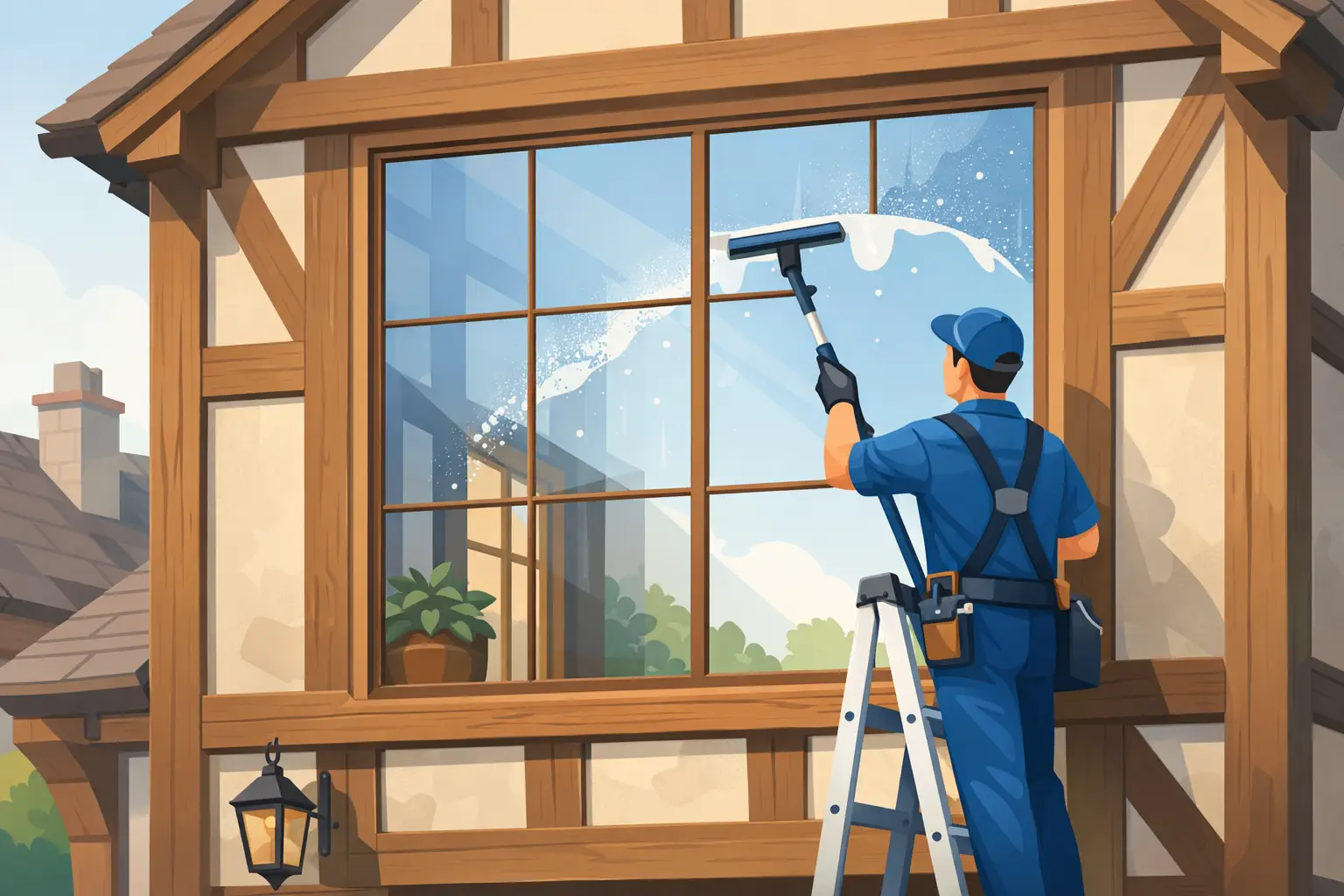
Glass can be cleaned effectively without flooding the edges. A controlled applicator, followed by a quality squeegee in skilled hands, reduces the amount of water left around timber sections. Final detailing along the margins should be done with a dry, lint-free cloth.
The frame deserves its own pace. Corners, meeting rails, and sills often need patient hand work. If grime has built up over time, it may take more than one gentle pass. That is preferable to forcing the issue with harsh scrubbing.
Window cleaning for heritage timber frames and painted finishes
Painted timber needs particular care because the coating is the first line of defense against moisture. If that film is already compromised, cleaning has to work around its limitations.
Any flaking or lifted paint should be treated as a maintenance issue, not something to scrub through. Cleaning around it carefully is wiser than trying to remove discoloration at all costs. The same applies to failing putty. Once those edges are disturbed, water ingress becomes more likely.
A good cleaner also watches for warning signs during the work itself. Soft spots, persistent staining, mold that returns quickly, and paint that wipes away too easily can all suggest the frame needs repair or refinishing. Cleaning is not separate from stewardship. It often reveals what the window is quietly asking for next.
Timing matters more than most people think
Hot sun can cause cleaning solution to flash off too quickly, leaving residue on glass and stressing finishes. Cold, damp conditions can slow drying, especially on shaded elevations. Mild, stable weather is usually best for heritage timber.
Maintenance frequency also depends on exposure. Coastal air, tree cover, traffic dust, and prevailing weather all change the schedule. Some homes benefit from lighter, more regular care rather than infrequent deep cleans. That approach is gentler on finishes and keeps buildup from becoming stubborn.
Common mistakes that shorten the life of timber frames
The most damaging errors tend to look efficient. Pressure washing forces water where it does not belong. Razor scraping can scratch older glass and disturb edge finishes. Multipurpose spray products may leave residues or react poorly with aged coatings. Even soaking tracks and sills can create problems if the moisture is not removed thoroughly.
Another common issue is using one process for every window on the property. Heritage homes often have variation from room to room. A sunny front elevation may be dry and stable, while a southern side window may already be carrying moisture stress. The same method will not always suit both.
And then there is neglect disguised as caution. Some owners avoid cleaning altogether because they are worried about damage. But allowing dirt, salts, bird residue, and organic buildup to sit on glass and timber is not protective either. Gentle maintenance is safer than long periods of inattention followed by an aggressive catch-up clean.
When professional care is the better choice
Not every heritage window requires specialist intervention every time. But some do benefit from experienced hands – especially upper-story windows, original joinery, fragile paint systems, or properties where presentation matters as much as preservation.
A professional approach should feel measured, not hurried. The cleaner should understand material sensitivity, work with controlled moisture, and notice the small signs that affect long-term condition. For homeowners who value peace of mind, that level of care is part of the service. It protects the asset while preserving the feeling of the home.
In Adelaide, where sun exposure, dust, and seasonal shifts can all influence exterior surfaces, that kind of tailored maintenance becomes even more valuable for older timber windows. A routine that suits the property is always better than a one-size-fits-all schedule.
For properties where standards are high and finishes matter, this is the kind of work Rosewood & Luster approaches with intention. Not as a quick task, but as careful stewardship.
A cleaner window, a better-kept home
Heritage timber frames reward patience. When cleaned with precision, they hold their dignity – crisp lines, clear glass, protected paint, and timber that continues to age with grace rather than strain. That is the real measure of quality here.
If your windows are part of what makes your home feel distinct, treat them that way. A gentle method, the right timing, and consistent care will always do more for heritage timber than force ever could.
Leave a Reply