
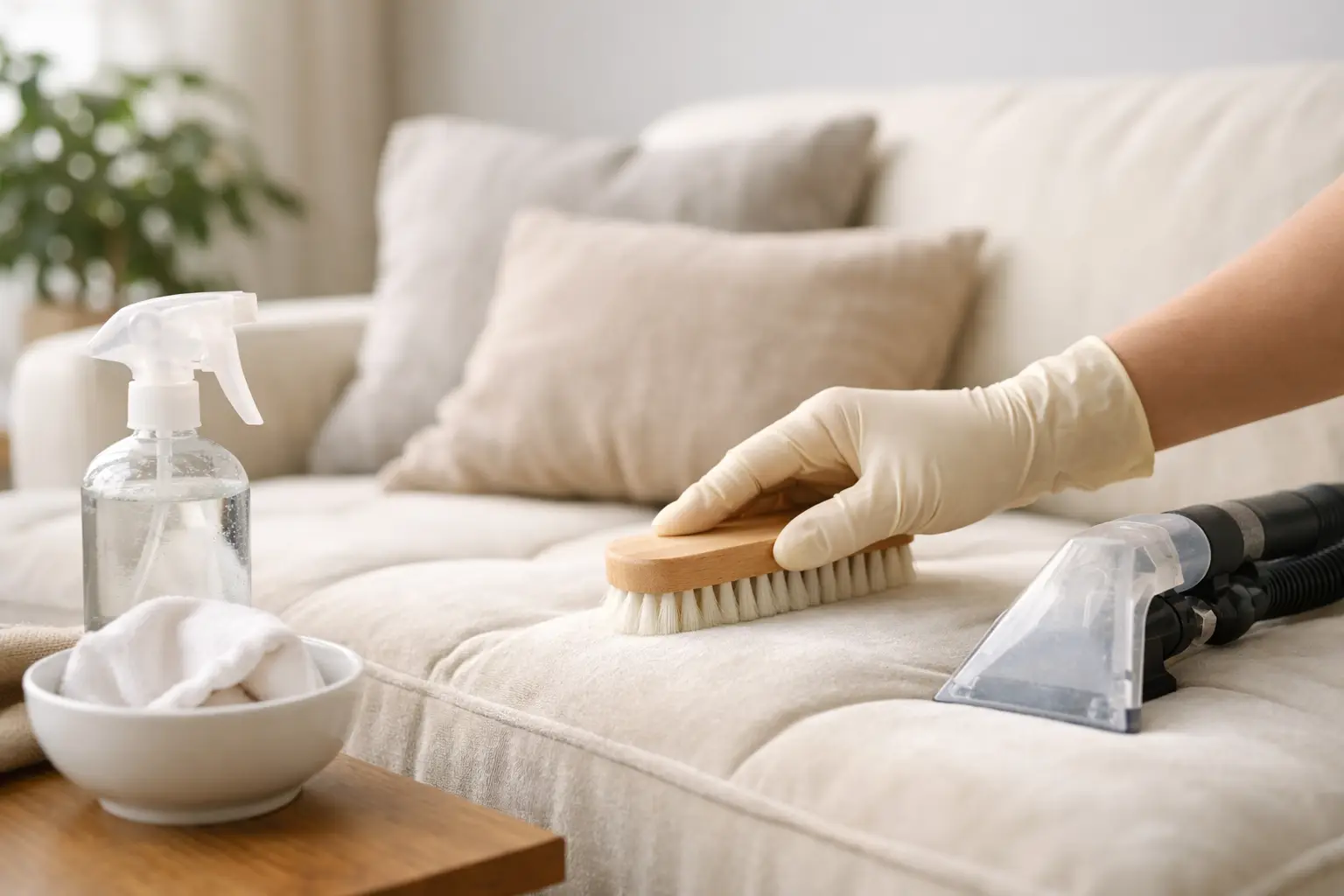
A pale linen sofa can look immaculate at breakfast and show the smallest mark by afternoon. A velvet armchair can lose its depth of colour when cleaned too aggressively. That is why a thoughtful guide to sensitive upholstery care begins with restraint: the right response protects the fabric’s character, while a rushed response can make a small incident permanent.
Fine upholstery is more than a surface to keep tidy. It is part of the atmosphere of a home, a carefully chosen finish that carries colour, texture and comfort through daily life. Caring for it well means understanding what the fibres can tolerate, acting early when spills happen, and knowing when a professional treatment is the wiser investment.
What Makes Upholstery Sensitive?
Sensitive upholstery is not limited to silk or antique furniture. Many modern pieces need specialised handling because their fibres, dyes, backing materials or finishes react poorly to moisture, heat, friction or strong cleaning agents. Velvet, linen, wool, viscose, suede, nubuck and delicate natural blends each have their own vulnerabilities.
Velvet can develop flattened or distorted pile. Linen may water-mark or shrink. Wool can felt when over-wet or agitated, while viscose is prone to browning, texture change and loss of strength when damp. Even a fabric marketed as durable may have a loose weave, a richly coloured dye or a protective finish that requires a measured approach.
The manufacturer’s care label is the first reference point, but it is not the whole story. Codes such as W, S, WS and X indicate broad cleaning methods, yet the furniture’s age, construction, existing wear and previous treatments also matter. A section that appears clean can still dry unevenly, reveal an old stain or react to a product used months earlier.
A Guide to Sensitive Upholstery Care Starts With Prevention
The most refined approach is to reduce the cleaning your furniture needs in the first place. Position sensitive pieces away from direct afternoon sun where possible. Adelaide’s bright, dry conditions can fade dyes and leave natural fibres feeling brittle over time, particularly beside large windows.
Rotate loose cushions regularly so that one seat does not carry all the daily wear. If a chair sits beside a favourite reading lamp or a sofa is always used at one end, rotate cushions and change their orientation every few weeks. This preserves shape and helps colour age more evenly.
Vacuuming is equally valuable, provided it is gentle. Use a clean upholstery attachment on low suction and move with the direction of the pile or weave. Dust, grit and pet hair settle into fabric and gradually act like fine abrasives. A light weekly pass is kinder than a forceful clean once the fabric looks tired.
For homes with children, pets or frequent entertaining, consider the practical rhythm of the room. Throws can be useful on everyday seating, but choose colourfast, breathable materials and wash them regularly. A throw is not a substitute for care, yet it can protect the areas most exposed to hands, paws and evening drinks.
Responding to Spills Without Setting the Stain
When a spill occurs, speed matters more than force. Do not scrub, rub in circles or reach immediately for a supermarket stain remover. Friction drives liquid deeper into the fibres and can leave a visible change in texture even after the stain itself has lifted.
First, remove any solids with a spoon or the edge of a clean cloth. Then blot the spill gently with a white, absorbent cloth, working from the outer edge towards the centre. Replace the cloth as it absorbs moisture. Coloured towels and printed paper can transfer dye, while excess water can create a larger problem than the original spill.
What happens next depends on the fabric and the stain. Plain water may be appropriate for some water-safe upholstery, but it can mark linen, velvet, viscose and certain blends. Oil-based spills, red wine, ink, makeup and pet accidents all require different treatment methods. The safest course for a valuable or delicate piece is to blot, protect the area from further contact and arrange professional assessment before experimenting.
Avoid heat while the stain is fresh. Hairdryers, heaters and steam can set proteins, distort pile or encourage a stain to migrate through the backing. Allowing an area to dry naturally with good airflow is usually gentler, although proper drying procedures should be tailored to the material.
The Hidden Risk of DIY Products
Many off-the-shelf sprays are made for convenience, not for fine furniture. They may contain bleaching agents, optical brighteners, detergents or solvents that affect dye stability. A product can appear successful while wet, only to leave a pale ring, sticky residue or stiff patch once the fabric dries.
Even mild soap can be troublesome if it is not fully removed. Residue attracts soil, so the treated spot becomes dirtier faster than the rest of the upholstery. On velvet and chenille, excessive moisture may also create directional marks that are difficult to correct.
If you plan to use any product approved by the manufacturer, test it first in a concealed section. Look beyond immediate colour change. Allow the test area to dry fully, then check for stiffness, watermarking, pile disturbance and dye transfer onto a white cloth.
Cleaning Methods Must Match the Fibre
There is no single best method for sensitive upholstery. Professional care begins with identifying the fabric, assessing soiling and carrying out a colourfastness test in an inconspicuous area. From there, the method may involve low-moisture cleaning, controlled solvent treatment, specialist extraction or careful hand finishing.
Low-moisture methods can be ideal where fabric is vulnerable to overwetting, but they are not automatically suitable for every stain. Extraction can remove embedded soil effectively from appropriate fabrics, yet too much water or poor drying can cause shrinkage, browning and odour. Solvent-based cleaning may suit some dry-clean-only textiles, although it requires proper ventilation, product knowledge and precise application.
This is where premium upholstery care differs from a quick surface clean. The aim is not merely to make the fabric look brighter for the day. It is to lift soiling while preserving the handle, drape, colour and structure that made the piece worth choosing.
Caring for Velvet, Linen and Wool
Velvet deserves particular patience. It should be vacuumed carefully using an appropriate attachment, with attention to the direction of the pile. Brushing or rubbing against that direction can leave the surface looking shaded or crushed. Steam may sometimes help revive pile, but only when the fibre type and construction permit it. Velvet made from cotton, silk, polyester or viscose can behave very differently.
Linen brings relaxed elegance to a room, but it shows moisture readily. Blot spills immediately and avoid saturating one spot. Regular vacuuming and gentle professional cleaning help manage the natural accumulation of body oils and airborne dust without creating patchiness.
Wool upholstery is naturally resilient, but it does not welcome harsh detergents or heavy agitation. Its fibres can felt and lose their soft, tailored finish. Keep wool seating away from persistent heat sources and treat spills promptly, particularly food and drink, which can attract moths if residue remains.
Protecting Finishes, Not Just Fabrics
Sensitive upholstery care also includes the furniture surrounding the fabric. Timber frames, brass details, leather piping, cane panels and painted legs each need their own treatment. A cleaning solution safe for the cushion may damage the finish beneath it if it runs or is applied carelessly.
Use clean white cloths, protect nearby timber and metal before treating fabric, and avoid leaving damp cushions against polished surfaces. Where removable covers are involved, never assume they can be machine washed simply because they have a zip. Covers may shrink, lose shape or become impossible to refit neatly.
Fabric protection can be worthwhile for selected upholstery, especially in active family rooms or entertaining spaces, but it is not a blanket answer. The wrong protector may change the fabric’s feel, deepen its colour or affect the way velvet catches the light. It should be chosen only after the textile has been assessed and cleaned correctly.
When Professional Care Is the Right Decision
Call for specialist help when a spill involves wine, ink, grease, urine, makeup or an unknown substance. The same applies when you notice water rings, colour transfer, lingering odour, flattened velvet, yellowing, mould concerns or a general dullness that vacuuming cannot resolve.
For valuable sofas, inherited armchairs and finely upholstered dining seating, scheduled maintenance is often more economical than waiting for visible damage. A tailored routine can address dust, oils and early marks before they become embedded, while preserving the calm, considered feeling of a well-kept room.
At Rosewood & Luster, upholstery treatment is approached as stewardship: a careful assessment, considered method and finish-focused result for furniture that deserves more than a generic clean. The smallest act of care – a gentle blot, a clean vacuum tool, a decision not to over-treat – can help a beautiful piece remain part of your home’s story for years to come.
Leave a Reply