
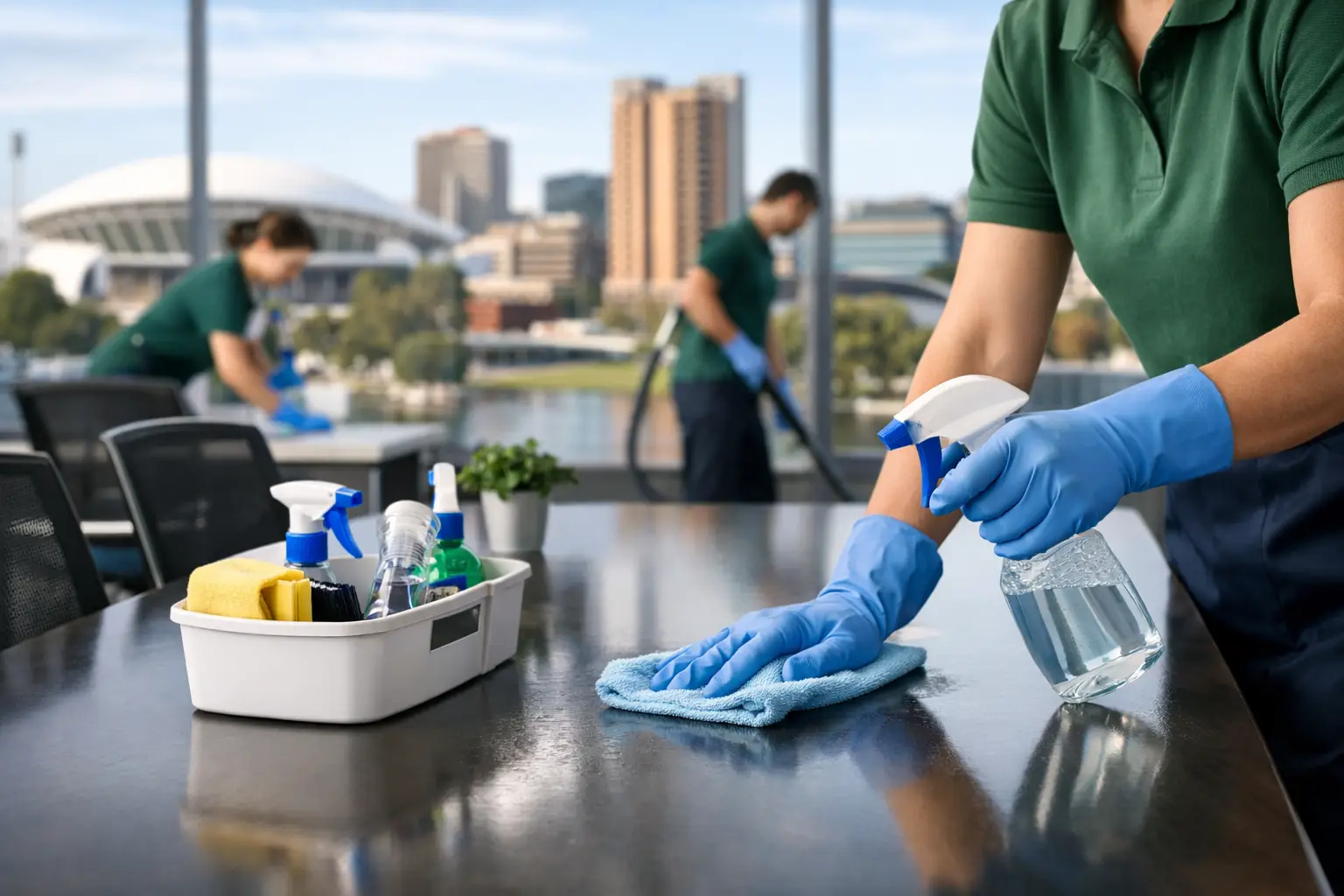
The first five minutes of a working day set a quiet standard. A reception desk marked by fingerprints, bins left too full, or washrooms that feel neglected can make a capable business appear careless. Strong Adelaide office cleaning outcomes do more than remove visible dust. They protect the experience people have of your workplace, from the team arriving each morning to the client waiting for a meeting.
For office managers, property managers and business owners, the real measure is not whether a clean has been completed. It is whether the premises continue to feel orderly, cared for and ready to represent the business without anyone needing to chase the details. That calls for a routine designed around the way your office actually operates.
What quality office cleaning should achieve
A premium office clean should produce a workplace that feels considered, not merely serviced. Floors should retain their finish rather than look dull from unsuitable products. Touchpoints should be hygienically attended to without leaving residue on glass, screens or polished surfaces. Kitchens and washrooms should feel fresh at every visit, not only immediately after a deep clean.
This distinction matters because offices carry more than furniture and equipment. They carry brand reputation, staff wellbeing and the practical conditions for focused work. Cleaning is stewardship of that environment.
The most reliable results tend to show up in three ways. First, the office maintains a consistent standard between visits because waste, spills and high-use areas are addressed at the right frequency. Second, staff notice fewer small frustrations: an empty soap dispenser, smudged boardroom glass, a lingering odour near the kitchenette. Third, the building’s finishes age more gracefully because they are cleaned with methods suited to their materials.
A low-cost arrangement can appear economical at the outset, yet become expensive when standards slip, managers spend time following up, or delicate surfaces are prematurely worn. Premium care is not about adding unnecessary tasks. It is about applying the right attention where it preserves the workplace best.
Adelaide office cleaning outcomes begin with the routine
There is no universal checklist that produces exceptional results in every workplace. A compact professional suite with client appointments has different needs from a busy multi-level office, a medical-adjacent administration space or a warehouse office with dust tracked in from the floor.
A tailored plan begins with observation. How many people use the space each day? Which rooms host clients? When are kitchens busiest? Are there polished concrete floors, timber joinery, natural stone, sensitive upholstery or interior glass that needs careful treatment? What can be accessed after hours, and what needs discreet attention during the day?
The answers determine both scope and timing. Reception, entryways, washrooms and kitchens commonly require frequent detail because they shape perception and carry the highest use. Boardrooms may need preparation before key meeting days. Carpeted areas benefit from regular vacuuming and periodic deeper treatment, while hard floors need a method that cleans effectively without compromising the finish.
Frequency is a practical decision, not a status symbol. An office with a small, mostly remote team may be beautifully maintained with a weekly service and scheduled detail work. A high-traffic workplace may need several visits a week, with washroom consumables, bins and entry areas receiving particular attention. The correct routine is the one that holds the standard through the week, not simply on cleaning day.
Detail is where presentation is protected
Visible surfaces deserve care, but the finest outcome is often created in the places people notice only when they are missed. Edges around skirting, the base of chairs, fingerprints on door hardware, dust on ledges, crumbs around shared appliances and marks on internal glass all affect whether a space feels genuinely maintained.
Detail also requires judgement. Aggressive products may make a surface look temporarily bright while stripping protective coatings or leaving a harsh scent behind. A heritage-quality approach considers the material first, then selects a finish-protecting method. This is especially relevant in offices fitted with timber, stone, premium furniture and carefully specified fixtures.
Hygiene without a harsh workplace feel
A well-cleaned office should feel fresh, not overpowering. Fragrance can mask a problem, but it is not evidence of hygiene. Effective cleaning focuses on removing soils, maintaining high-touch points and preventing the build-up that causes odours or a neglected appearance.
In shared spaces, the priority is sensible and consistent attention. Door handles, lift buttons where included in the scope, kitchen benches, appliance handles, taps, toilet flush points and shared desks all warrant a considered approach. Yet a good provider also understands the office environment. Cleaning around technology, confidential documents and occupied workstations requires respect, discretion and clear boundaries.
This is where communication matters. If staff have particular allergies, if a boardroom must remain untouched before an event, or if certain areas are restricted, those instructions should be built into the routine rather than repeatedly explained. Precision is as much about listening as it is about technique.
Clear standards prevent the slow slide
Many cleaning partnerships begin well and gradually lose their edge. The usual cause is not a single missed task. It is the absence of a clear, shared standard for what good looks like.
A dependable office cleaning plan identifies the agreed areas, frequency, priorities and access arrangements. It also leaves room for the occasional reality of office life: a spill before a visitor arrives, extra rubbish after a staff function, a builders clean following a small refurbishment, or windows that need attention before an important inspection.
Quality control should be calm and practical. Office managers should not need to conduct a daily audit, but they should be able to raise feedback easily and expect it to be acted on. In return, cleaners need accurate information about changes to access, room use and site requirements. The strongest relationships are built on this simple exchange of clarity and care.
It is also wise to distinguish routine cleaning from specialised work. Regular service maintains everyday presentation. Periodic carpet treatment, internal or external window care, upholstery cleaning, detailed kitchen work and post-construction cleaning require additional time, equipment and planning. Treating them as separate services protects the quality of both the routine and the deeper work.
The outcome staff and visitors actually feel
Cleanliness has an emotional effect that is easy to underestimate. A calm, orderly workplace helps people settle into their work. It tells staff their environment is valued and gives visitors confidence that the business behind the front desk is attentive in other areas too.
That does not mean every office needs to look sterile. A creative studio, a legal practice and a family-owned business can each retain their own character. The goal is a space that feels like itself at its best: composed, welcoming and cared for.
For Adelaide businesses, local conditions can also shape the plan. Seasonal dust, wet-weather foot traffic and the demands of high-activity commercial precincts can affect entryways, windows and floors more quickly than expected. Reviewing the routine as the seasons and workplace needs change is often the difference between an adequate result and a consistently polished one.
Rosewood & Luster approaches commercial cleaning with that long-view mindset. The focus is not simply to leave an office looking clean at the end of a visit, but to protect the materials, rhythm and reputation of the space over time.
The right office cleaning outcome is quiet confidence: a workplace that is ready before the first person arrives, remains composed through the busiest hours, and leaves every visitor with the sense that care is part of how you do business.
Leave a Reply