
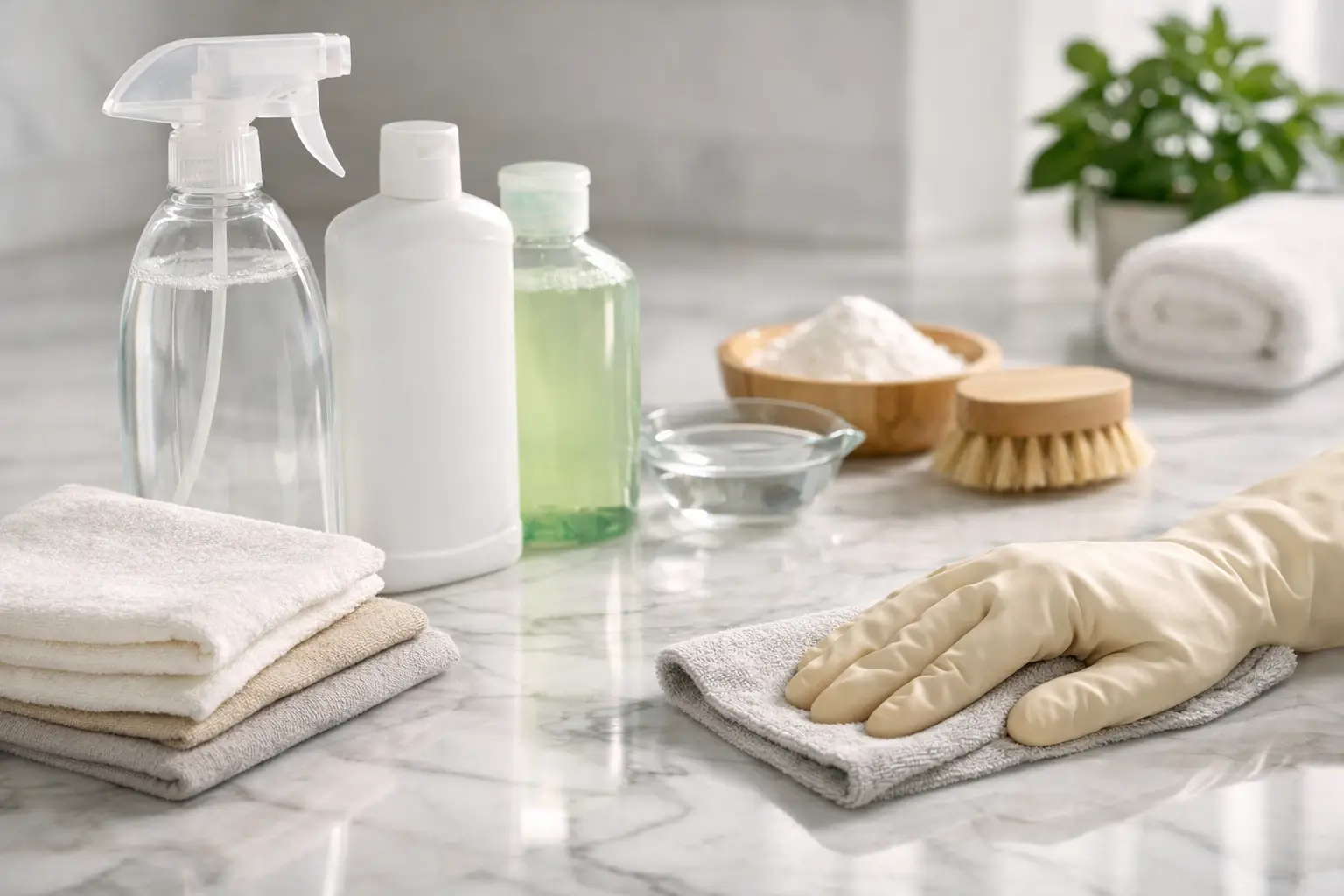
A marble benchtop can look immaculate at breakfast and marked by lunchtime. A splash of orange juice, a ring left beneath a glass, or an enthusiastic scrub with the wrong product can dull a finish that took nature millennia to create. Choosing the best cleaners for marble is not about finding the strongest formula in the cupboard. It is about preserving the stone’s quiet radiance with thoughtful, precise care.
Marble is often chosen for the way it makes a room feel – composed, light-filled and enduring. That beauty deserves maintenance with the same intention. The right cleaner removes everyday soil without stripping sealant, clouding the surface, or aggravating the natural mineral structure beneath.
Why marble requires a different standard of care
Marble is a calcareous natural stone, formed largely from calcium carbonate. This is what gives it its distinctive veining and soft lustre, but it also means it reacts badly to acid. Lemon, vinegar, wine, many bathroom sprays and even some supposedly natural cleaning blends can etch the surface. Etching is not always a stain. It is a physical change to the polished finish, often appearing as a pale, dull or rough patch.
Marble is also porous to varying degrees. A properly applied penetrating sealer helps slow the absorption of oils and coloured spills, but it does not make the stone invincible. Sealant is a protective measure, not permission to leave a spill sitting overnight.
This is why a cleaner that works beautifully on ceramic tile, laminate or stainless steel may be entirely unsuitable for marble. Premium care begins with respecting the material in front of you, rather than applying one method to every surface.
The best cleaners for marble are pH-neutral
For routine cleaning, the best choice is a purpose-made pH-neutral stone cleaner. Look for a product that clearly states it is safe for natural stone, marble, limestone and sealed stone surfaces. These formulas are designed to lift ordinary kitchen residue, light bathroom soil and daily dust without an acidic or highly alkaline reaction.
A pH-neutral cleaner is particularly well suited to polished marble benchtops, vanity tops, tiled floors, fireplace surrounds and table surfaces. It should be used sparingly according to the label directions, then removed with a clean, damp microfibre cloth. The final dry buff matters. It prevents water spots and gives the surface the clear, even finish that makes marble feel so considered.
For a very light daily refresh, clean warm water and a high-quality microfibre cloth can be enough. This is often the gentlest option when there is no grease or visible residue to remove. Water alone will not address every cleaning need, however, particularly in a busy kitchen or commercial bathroom. That is where a neutral stone cleaner earns its place.
What to look for on the label
The safest marble cleaner is not necessarily the most fragranced, heavily foaming or aggressively marketed. Choose a formula described as pH-neutral and suitable for natural stone. It should not contain acids, abrasive particles, bleach or strong degreasing agents unless the manufacturer specifically confirms it is marble-safe.
A ready-to-use spray is practical for benchtops and vanities, where speed and control are useful. A concentrated stone cleaner can be better value for larger tiled areas, provided it is diluted accurately. More product does not deliver a better result. Excess cleaner can leave a film that attracts dust and compromises the clarity of the finish.
If you are caring for an older surface, honed marble, or stone with existing etching and stains, test any new product in a discreet area first. Stone varies greatly in density, finish and previous treatment. A careful test is a small act of stewardship that can prevent a larger restoration job.
Cleaners and methods marble should never meet
The most common marble damage happens with ordinary household products used in good faith. Avoid the following on marble unless a stone professional has directed otherwise:
- Vinegar, lemon juice and citric acid-based sprays
- Bathroom, shower and toilet cleaners formulated to remove scale
- Bleach, ammonia and strong alkaline degreasers
- Cream cleansers, scouring powders and abrasive pads
- Generic disinfectant wipes, unless explicitly approved for natural stone
Acidic products are especially risky because their damage can be immediate. A quick wipe with vinegar may leave no obvious stain, yet the surface can lose polish in the exact shape of the splash or drip. Abrasives create a different problem: fine scratches scatter light, making a once-refined surface look hazy and tired.
Steam cleaning also calls for restraint. While it may sound chemical-free, high heat and moisture can stress some sealers, loosen grout or drive moisture into vulnerable edges and fissures. On marble floors, a controlled damp mop and stone-safe cleaner is usually the more dependable routine.
A refined routine for marble benchtops and vanities
Daily care should be simple enough to sustain. Wipe spills promptly with a soft absorbent cloth, especially wine, cooking oil, fruit juice, coffee, cosmetics and toothpaste. Follow with a damp microfibre cloth and dry the area rather than allowing water to evaporate on the stone.
For scheduled cleaning, apply a small amount of pH-neutral stone cleaner to the cloth or surface as directed. Wipe gently in overlapping passes, paying attention to areas around taps, cooktops and appliance edges where residue accumulates. Rinse the cloth regularly so you are lifting soil rather than moving it around. Finish with a dry, clean microfibre cloth.
Avoid leaving soap, bottles, wet glassware or metal containers in the same position for extended periods. A tray beneath frequently used handwash or cooking oils is a discreet way to reduce rings and spills. Felt pads under décor and serving boards under food preparation protect marble tables and islands from scratches, heat and accidental staining.
Marble floors need clean water, not a wet mop
Marble flooring benefits from frequent dry dusting or vacuuming with a hard-floor setting. Grit tracked in from outside behaves like fine sandpaper under shoes and furniture feet. Place quality mats at entrances, attend to spills promptly and use protective pads beneath moveable furniture.
When wet cleaning is needed, use a well-wrung microfibre mop with diluted pH-neutral stone cleaner. The mop should be damp, never saturated. Change the water once it becomes visibly cloudy, because grey water is simply redepositing soil across the floor. On expansive floors in high-use homes, lobbies or offices, a consistent professional routine offers better protection than occasional heavy cleaning.
Stains, etching and when cleaning is no longer enough
Not every mark on marble is a cleaning problem. A dark patch may be an absorbed oil or organic stain. A pale, dull mark is more likely etching. Rust-coloured marks can come from metal, while a stubborn shadow near a sink may indicate moisture movement beneath or around the stone. Each calls for a different response.
Do not attack an unknown mark with stronger chemicals. Photograph it in natural light, note what may have caused it, and keep the area dry and free from further products. A stone restoration specialist can assess whether a targeted poultice, resealing, honing or repolishing is appropriate. Attempting a home remedy with bicarbonate, peroxide or acids can deepen the issue, particularly on coloured or highly polished marble.
Sealant should also be reviewed periodically. The right frequency depends on the stone, the sealer used and how the surface is used. A kitchen island used daily may need more attention than a rarely touched fireplace surround. If water darkens the stone quickly rather than beading briefly on the surface, it is sensible to seek advice about resealing.
Care that protects more than a surface
Marble rewards restraint. A neutral cleaner, soft cloth, prompt spill response and a considered maintenance rhythm will do more for its longevity than a cupboard full of harsh products. For Adelaide homes and workplaces where stone is part of the finish, Rosewood & Luster approaches each surface as an asset with a story, not another job to rush through.
The finest marble care is rarely dramatic. It is the quiet discipline of using the right cleaner, noticing the early signs of wear, and giving a remarkable material the measured attention it needs to remain luminous for years to come.
Leave a Reply