
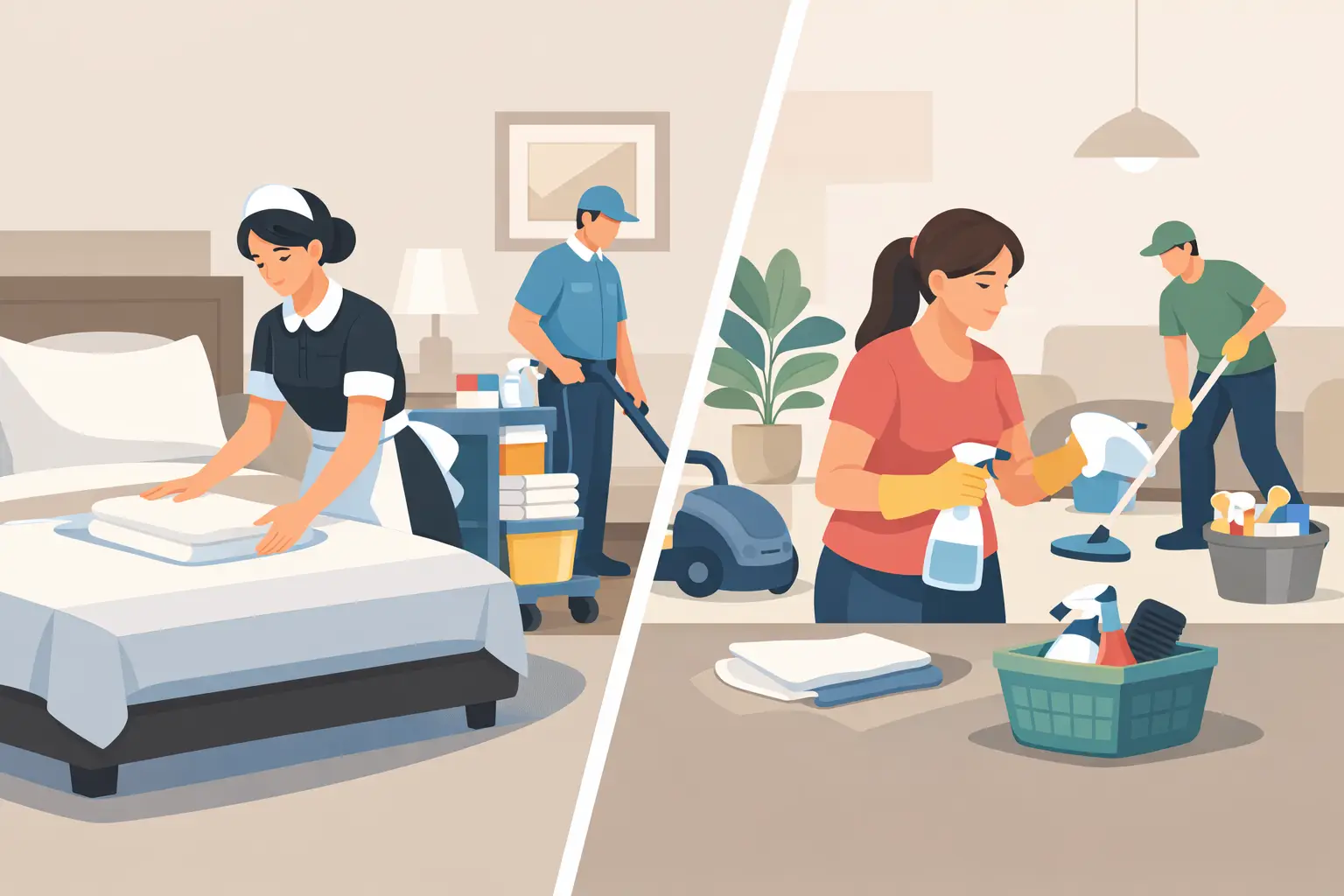
Some homes look clean and still feel unsettled. The counters are wiped, the floors are vacuumed, yet laundry is waiting, beds are unmade, and the rhythm of the home still feels slightly off. That is usually where the question of housekeeping service vs regular cleaning begins – not with appearance alone, but with how a space supports daily life.
For households that value calm, consistency, and proper care, the distinction matters. These two services overlap, but they are not the same. One is centered on cleaning tasks. The other supports the living environment more broadly, with an eye toward upkeep, order, and the small details that shape how a home feels day after day.
Housekeeping service vs regular cleaning: what changes?
Regular cleaning is generally task-based. It focuses on removing dust, dirt, grime, and buildup from the surfaces and rooms that need routine attention. Think kitchens, bathrooms, floors, mirrors, counters, and general tidying of cleaned areas. Its purpose is straightforward – maintain cleanliness and hygiene on a recurring schedule.
Housekeeping usually extends beyond that. It still includes cleaning, but it also supports the function of the home. Depending on the provider and the plan, that can mean making beds, refreshing linens, folding laundry, organizing lived-in spaces, resetting rooms, and noticing the details that help the household move smoothly.
The difference is not that one is better in every case. It is that one is narrower and one is more holistic. If regular cleaning restores cleanliness, housekeeping helps restore order.
What regular cleaning is designed to do
Regular cleaning is often the right fit when the home is already reasonably well-managed and the main need is consistent maintenance. Many busy professionals and families do not need someone to handle domestic routines from end to end. They need a dependable team to keep bathrooms sanitized, floors cared for, kitchen surfaces fresh, and dust under control.
In a well-executed regular cleaning service, precision still matters. Sensitive finishes need the right products. Stone, timber, specialty fixtures, stainless steel, and delicate furnishings all respond better to thoughtful care than aggressive cleaning. A premium service does not simply move quickly across the surface. It cleans in a way that protects the materials underneath.
That point is often missed when people compare options on price alone. A lower-cost clean may cover the same rooms on paper, but not with the same level of finish awareness. In homes with quality furniture, custom cabinetry, natural stone, framed glass, or heritage details, that difference becomes visible over time.
What housekeeping is designed to do
Housekeeping is better understood as domestic support with cleaning built into it. The goal is not only a clean house, but a home that feels reset. Bedrooms are left ready for the evening. Towels and linens are handled with care. Living spaces are returned to order. Everyday clutter is managed with discretion rather than simply worked around.
This can be especially valuable in households where time is limited or routines are complex. Families with children, clients managing health needs, older adults, or professionals balancing demanding schedules often need more than surface cleaning. They need continuity. A housekeeper can help preserve that sense of stability by handling recurring domestic tasks that otherwise accumulate into stress.
There is also an emotional difference. Regular cleaning tends to be visible in polished surfaces and fresh rooms. Housekeeping is felt in the pace of the home. It creates ease. It reduces visual noise. It helps the space function in a way that supports the people living in it.
Housekeeping service vs regular cleaning for different households
The most useful question is not which service sounds more premium. It is what your home actually needs.
If your household already has strong routines in place, regular cleaning may be enough. A weekly or biweekly visit can maintain standards without overcomplicating the service plan. This is common for smaller households, apartments, and homes where laundry, linens, and organization are already handled internally.
If your home feels like it is always one step behind, housekeeping may be the better answer. That does not mean the space is neglected. It usually means life is full. School schedules, work demands, caregiving responsibilities, mobility limitations, or frequent guests can all create a gap between what gets cleaned and what gets properly reset.
For NDIS-supported clients and their coordinators, the distinction can be especially important. Some clients need a service focused primarily on cleaning and sanitation. Others benefit more from respectful in-home support that helps maintain safe, orderly daily living conditions. In those cases, housekeeping-style assistance can better support comfort, dignity, and routine.
The trade-off most people do not see
Housekeeping usually requires more judgment, more familiarity with the household, and more consistency from the service team. It is not just a checklist. It depends on understanding where items belong, how the home is used, and what “done properly” means for that particular client.
That is why housekeeping often works best with customized plans and repeat visits rather than one-off bookings. The service becomes more effective as the provider learns the home, its finishes, and the family’s preferences. There is trust involved, and trust is built through reliability and discretion.
Regular cleaning, by contrast, can be easier to scope and standardize. That can make it more budget-friendly and more practical for clients who want defined outcomes in defined areas. Neither model is wrong. They simply solve different problems.
How premium providers approach both services
At the higher end of the market, the line between housekeeping and regular cleaning can be thoughtfully tailored rather than rigid. A premium provider may offer recurring cleaning as the foundation, then layer in housekeeping tasks based on the household’s priorities.
That might mean a domestic plan where kitchen and bathroom cleaning remain central, but bed making, linen changes, light laundry, or room resets are added to support the way the home is actually lived in. This is often the most sensible approach because it avoids paying for a broad service package when only certain forms of support are needed.
It also produces better results. Homes are not identical, and neither are the people in them. A tailored plan respects that. It treats the property as an asset worth protecting and the household routine as something worth preserving.
Signs you need regular cleaning, not full housekeeping
You probably need regular cleaning if your main concerns are dust, bathrooms, floors, kitchen upkeep, and keeping the home consistently presentable. You may also prefer it if you value privacy around personal items and would rather keep laundry, bedroom resets, and organization in your own hands.
This service is often ideal for clients who want professional results without handing over too much of the household rhythm. It creates a clean baseline and leaves the finer domestic routines to the household itself.
Signs housekeeping may be the better fit
If clean surfaces are not enough to make the home feel settled, housekeeping is worth considering. The same is true if you are constantly catching up on beds, towels, laundry, room resets, or the small daily tasks that keep a home from feeling unraveled.
Housekeeping can also be the stronger choice after periods of change – a new baby, recovery from illness, increased work travel, an aging family member moving in, or a season of unusually full schedules. In those moments, support is less about appearances and more about preserving ease.
Choosing well starts with honesty
When comparing housekeeping service vs regular cleaning, the best decision usually comes from looking at friction, not aspiration. What is repeatedly falling behind? What creates stress in the home? What needs to be protected – your time, your finishes, your routines, or all three?
A good provider should be able to map the service around those answers. That is where premium care stands apart. It is not about selling the biggest package. It is about recommending the right level of support, delivered with precision and respect.
For households in Adelaide seeking that level of tailored care, Rosewood & Luster reflects this more considered approach – one that treats cleaning as stewardship, and the home as something worthy of lasting attention.
The right service leaves more than a polished room behind. It gives your home back its composure, and gives you a little more room to breathe.
Leave a Reply