
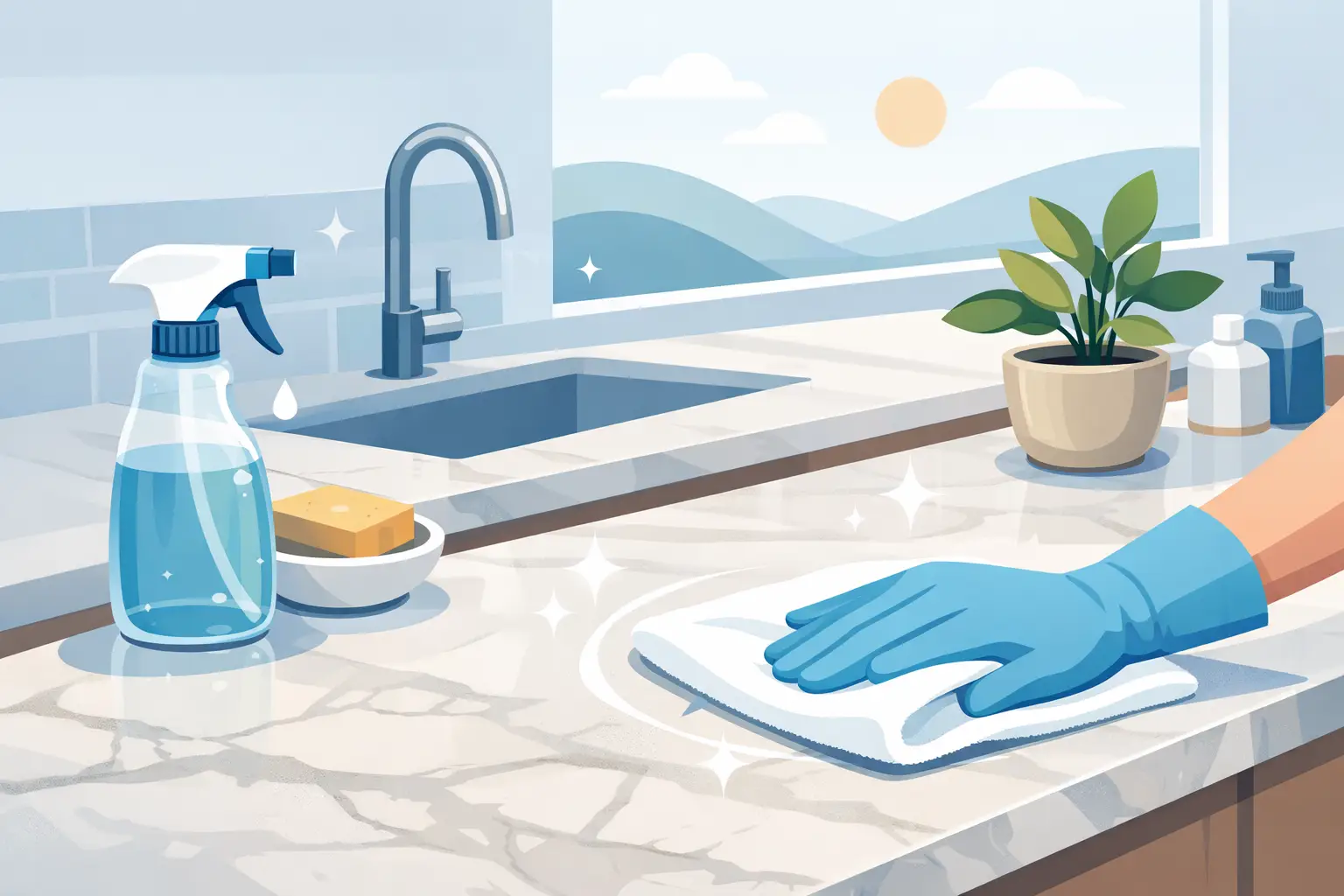
A stone benchtop can make a kitchen or bathroom feel quietly exceptional – but only when its finish is protected with the right kind of care.
Natural stone is not a surface that responds well to harsh shortcuts. Marble can etch, granite can dull, limestone can mark, and even engineered-looking finishes on natural materials can lose their clarity when cleaned too aggressively. If you want that soft radiance to last, cleaning has to be less about force and more about stewardship.
A practical guide to cleaning natural stone benchtops
The first principle is simple: clean gently, and clean consistently. Dust, cooking residue, soap film, oils, and acidic splashes do more damage over time than most people realize. The goal is not just to make the surface look tidy for the day. It is to preserve the finish, the seal, and the feeling of refinement that made the stone worth choosing in the first place.
For day-to-day care, use a soft microfiber cloth and warm water with a pH-neutral stone cleaner, or a very small amount of mild dish soap diluted properly. Wring the cloth well so the surface is cleaned, not soaked. Too much water can leave residue, especially around seams, edges, and backsplashes.
After wiping, follow with a dry microfiber cloth. That second pass matters. It removes any remaining moisture and helps prevent streaking, water spots, and the filmy look that often gets mistaken for wear.
What to avoid on stone surfaces
A beautiful stone surface can be damaged by products that seem harmless because they are common under the sink. Vinegar, lemon-based cleaners, bleach-heavy sprays, bathroom disinfectants, and abrasive scrubs are all risky choices. On acid-sensitive stones like marble, travertine, and limestone, acidic products can leave dull, pale marks known as etching. On darker stones, harsh cleaners may strip away the polished look and leave the finish uneven.
It also depends on the stone and its finish. Honed stone tends to hide light scratching better, but it can show oils more easily. Polished stone reflects light beautifully, but residue and etching can become more obvious. Leathered or textured finishes are forgiving in some ways, yet they can trap grime if they are not cleaned thoroughly and gently.
Daily care for natural stone benchtops
Daily maintenance should feel calm and efficient, not complicated. Start by clearing crumbs and loose debris with a dry microfiber cloth. Then wipe the benchtop with your damp cloth and stone-safe cleaner, working in overlapping passes rather than scrubbing one spot too hard.
Pay attention to areas around sinks, cooktops, and prep zones. These are the places where oils, acids, and water collect first. A polished stone around a kitchen faucet may look clean at a glance while still holding a ring of mineral buildup or soap residue that slowly changes the finish.
If you cook often, wipe the benchtop at the end of each day rather than waiting for a deeper weekly clean. Natural stone rewards consistency. Small, regular care is far safer than letting buildup harden and then trying to remove it with force.
The right cloths and tools
The best tools are rarely dramatic. Soft microfiber cloths, a pH-neutral cleaner labeled safe for natural stone, and a non-abrasive sponge are usually enough. Avoid rough scouring pads, magic eraser-style abrasives, and stiff brushes unless a stone professional has confirmed they are safe for your specific finish.
Even paper towels can be less ideal than microfiber if they leave lint or encourage repeated rubbing. A softer touch preserves clarity better.
How to handle spills before they stain
Stone is durable, but it is not stain-proof. Sealing helps slow absorption, not eliminate it. Wine, coffee, olive oil, turmeric, tomato sauce, cosmetics, and hand soap can all leave marks if they sit too long.
When a spill happens, blot it immediately. Do not wipe it back and forth, especially if the liquid is deeply colored or acidic. Blotting lifts the spill instead of spreading it. Then clean the area with a damp microfiber cloth and your stone-safe cleaner, and dry it fully.
Speed matters more than intensity. A fresh spill usually needs a calm response, not a strong chemical one.
If a stain has already set
This is where many benchtops are accidentally damaged. People see a darkened area or ring and reach for vinegar, bleach, or an all-purpose degreaser. That often makes the problem worse.
Instead, identify the type of stain first. Organic stains from coffee, tea, or food may respond to a stone-safe poultice. Oil-based stains need a different treatment than rust or mineral marks. Etching is another issue entirely – it is not a stain sitting on the stone, but physical damage to the surface finish.
If you are not sure what caused the mark, treat the area conservatively. Test any product in a discreet section first. On premium surfaces, restraint is part of proper care.
Sealing matters, but it is not a free pass
One of the most common misunderstandings in any guide to cleaning natural stone benchtops is the role of sealant. A sealed benchtop is easier to maintain, but it is still vulnerable to acids, oils, and neglected spills. Sealers slow penetration. They do not make stone indestructible.
How often stone needs resealing depends on the material, the finish, and how heavily the surface is used. A family kitchen with daily cooking may need more frequent attention than a guest bathroom vanity. Some dense granites hold up well for longer periods, while softer or more porous stones need closer monitoring.
A simple water test can give you a clue. Place a few drops of water on the surface in an inconspicuous area. If the water beads for several minutes, the seal may still be performing well. If it darkens the stone quickly, it may be time to reseal.
That said, sealing is best done with the right product and preparation. Applying the wrong sealer, or applying it over residue, can create a patchy finish that is harder to correct later.
A better weekly routine
Weekly care is where preservation really takes shape. This is the time to clean edges, corners, around fixtures, and any detailing where residue settles quietly. Use the same pH-neutral approach, but move more slowly and inspect the surface under good light.
You may notice subtle haze near a cooktop, greasy buildup along the front edge where hands rest, or soap film around a vanity basin. These are normal, but they should be addressed gently before they become stubborn.
For textured stone, use a soft brush only if needed, and only with light pressure. For polished surfaces, take extra care to buff dry with a clean cloth so the finish stays crisp.
Kitchen and bathroom differences
Kitchen stone usually faces oils, food acids, and heat exposure. Bathroom stone more often deals with soap residue, cosmetics, toothpaste, and standing water. The cleaning method stays similar, but the watchpoints change.
In kitchens, prioritize immediate spill cleanup and use boards or trays under acidic ingredients and oils. In bathrooms, keep products like hairspray, nail polish remover, and strong acne treatments away from the stone whenever possible. A surface can look solid and still be chemically sensitive.
When professional care is the wiser choice
There is a point where home care should give way to specialist attention. Deep etching, persistent staining, dull traffic patterns, buildup that will not lift, and uncertainty around resealing all call for a more experienced hand.
This is especially true in premium homes, commercial settings, and properties where finishes need to stay presentation-ready without trial and error. Professional stone care is less about aggressive restoration and more about using the correct method before avoidable damage sets in. That philosophy sits at the heart of careful asset stewardship.
For clients who value finish-protecting maintenance across the home, Rosewood & Luster approaches delicate surfaces with that same heritage-minded precision, treating care as a craft rather than a rushed routine.
Habits that protect the finish for years
The surfaces that age best are usually not the ones cleaned hardest. They are the ones protected by quiet habits: wiping spills quickly, using the right cleaner, drying after washing, avoiding acidic products, and paying attention before minor marks become permanent ones.
Natural stone has character, and part of caring for it well is respecting that not every mark responds the same way. Some issues need daily upkeep. Some need resealing. Some need a specialist. Knowing the difference is what keeps a benchtop looking composed instead of merely clean.
If your stone still feels calm, luminous, and smooth under the hand after years of use, that is not luck. It is the result of care done with intention.
Leave a Reply