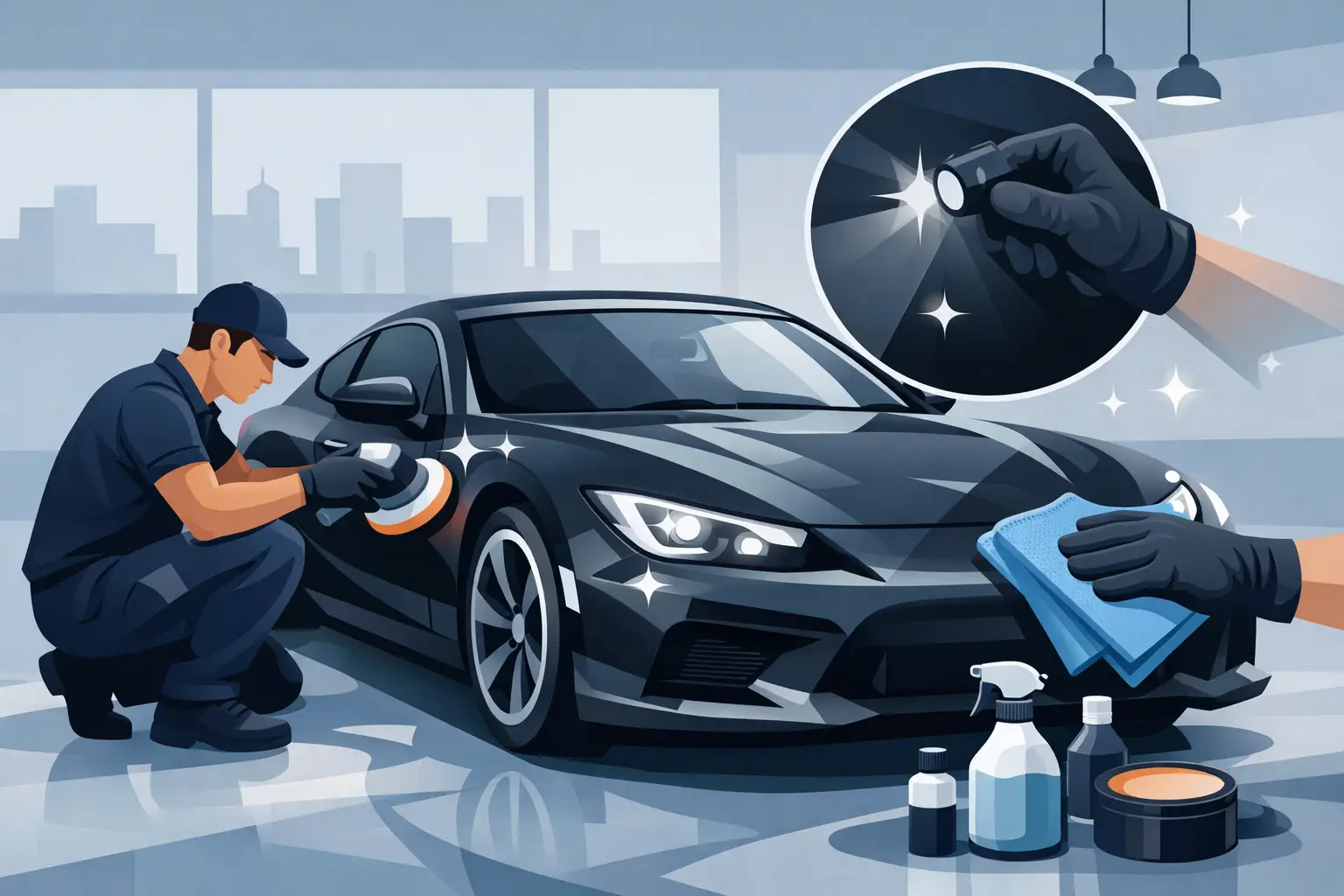
A premium detail can look impressive for the first thirty seconds. The real test starts when you walk the car slowly, catch the paint in changing light, open the doors, and notice whether every surface feels intentionally finished. To properly review premium car detailing finish quality, you have to look beyond gloss and ask a better question: was the vehicle simply cleaned, or was it carefully restored and protected?

That distinction matters more than most owners realize. A hurried detail can leave behind shiny dressings, smeared glass, trapped dust, and minor surface damage hidden under filler-heavy products. A premium finish, by contrast, feels composed. Paint reads clear rather than greasy. Trim looks conditioned, not artificially wet. The cabin feels refreshed without smelling over-fragranced or slick to the touch.

What premium finish quality actually means

Finish quality is the standard of the final result after every correction, cleaning, and protection step has been completed. In practical terms, it is the difference between a car that photographs well from ten feet away and one that still looks refined at arm’s length.

Premium detailing is not only about making a vehicle bright. It is about respecting materials. Clear coat, piano black trim, leather, alcantara, rubber seals, wheels, and interior plastics all respond differently to products and handling. True quality comes from using the right pressure, the right tools, and the right sequence so the finish is enhanced without being stressed.

This is where many reviews go wrong. Owners often judge a detail by immediate visual impact alone. Shine matters, but premium work also shows in consistency, restraint, and durability. If every panel, edge, vent, and seam has been treated with care, the vehicle carries a sense of order that lower-tier work rarely achieves.

How to review premium car detailing finish quality like a professional

Start with the paint, because it reveals the most about the detailer’s standards. Good paintwork should look clear and even, not cloudy or masked by oily residue. Under daylight or focused lighting, check for streaking, holograms, buffer trails, and missed contamination. A premium finish reflects cleanly and feels smooth when lightly touched with the back of your fingers.

Look closely at panel edges, around badges, and near door handles. These are the places rushed work tends to miss. If residue is left in creases or polish dust is hiding in emblems, the finish may be more cosmetic than careful. Premium work carries through to the small transitions, where precision is harder to fake.

Wheels and tires are the next giveaway. Clean wheels are common. Properly finished wheels are different. Barrels, lug recesses, calipers, and inner spokes should be addressed where accessible, not just the front face. Tires should appear dark and healthy, never slung with greasy dressing that transfers to paint or leaves an unnatural shine.

Glass should be genuinely clear from both sides. This sounds basic, yet it is one of the easiest places to spot rushed detailing. Sit in the driver’s seat and look toward the windshield at an angle. If you see haze, wiper arc residue, or smearing in the corners, finishing standards likely dropped during the final stage.

Exterior signs of a premium detailing finish

A strong exterior finish has balance. Paint has depth, but trim remains authentic to the material. Rubber seals are clean and nourished, not drenched. Chrome or satin accents are polished appropriately for their finish. Door jambs are clean enough to suggest the detailer did not stop at visible surfaces.

Protection also matters. If a wax, sealant, or ceramic-based topper has been applied properly, the surface should feel slick but not sticky. Water behavior later on will reveal more, but even at handover, the vehicle should have a composed, protected feel rather than a temporary showroom gloss.

There is also a discipline to premium finishing that shows in what has not been done. Over-polishing can thin clear coat. Heavy degreasers can dry trim. Aggressive brushing can mar soft interior surfaces. The best detail is often one that improves the car noticeably while preserving the integrity of every material.

Paint clarity, not just shine

Shine is easy to create for a short period. Clarity is harder. When you inspect the hood or side panels, reflections should look sharp, not smeared. Dark vehicles make this especially obvious, but lighter paint shows it too under direct light.

If the car appears glossy yet hides fine swirls, that may mean temporary gloss enhancers are doing most of the work. A premium finish usually reflects careful decontamination and, where appropriate, mild paint correction that improves the surface rather than simply covering defects.

Trim, seals, and finishing touches

Exterior plastics and rubber pieces should look revived, not soaked. Uneven darkening, drip marks, or product residue around trim edges suggest speed over care. Premium detailing respects how each piece should naturally present.

The same applies to exhaust tips, grilles, badging, and fuel filler areas. They do not need to look exaggerated. They need to look complete.

Interior finish quality is where craftsmanship shows

A premium interior detail creates relief the moment you sit down. The cabin should feel calm, clean, and intentional, never damp with product or scented to disguise missed work. Touch matters here as much as appearance.

Leather should feel supple and matte unless the manufacturer finish naturally carries more sheen. Plastics should be clean and dry to the touch. Screens, cluster lenses, cupholders, vents, seat tracks, and stitching lines should show attention. If crumbs remain in seams or dust lingers in vent blades, the finish was likely not carried through with discipline.

Review the steering wheel carefully. It is one of the most handled surfaces and one of the clearest indicators of proper technique. A premium result removes buildup without leaving the wheel slippery or over-treated. The same goes for shift knobs, door pulls, and touchpoints across the cabin.

Scent and surface feel

Many people associate a strong fragrance with cleanliness. In premium detailing, that is not always a positive sign. Overpowering scent can cover chemical residue or mask incomplete cleaning. A well-finished cabin should smell fresh and refined, not artificial.

Surface feel tells the same story. If dashboards or door panels feel oily, the finish may have been rushed with dressing rather than carefully cleaned and protected. Quality leaves materials natural, comfortable, and appropriate to the vehicle.

The trade-off between speed and finish quality

Not every vehicle needs the same level of correction, and not every owner needs concours-style detailing. That is where honest service matters. A good detailer explains what the car needs, what can be improved safely, and what level of result is realistic within the time and budget.

This is the trade-off many customers face. Fast turnaround can be convenient, but premium finishing takes time. Paint decontamination, careful drying, interior brushwork, glass refinement, and precise product application are labor-intensive. If the result seems unusually cheap or unusually fast, something was likely skipped.

That does not mean the most expensive package is always the right one. It means the quality of the finish should match the promise being made. Premium service is not excess for its own sake. It is disciplined care delivered with consistency.

Questions worth asking before you book

If you want to review premium car detailing finish quality before committing, ask how the service handles delicate trim, whether paint correction is measured to the vehicle’s condition, and what protection is actually included at the end. Ask how interiors are finished, not just cleaned. Ask what the handover standard looks like.

The answers should sound specific, not vague. A quality-focused provider will talk about methods, materials, and outcome standards with confidence. That level of clarity usually reflects the work itself.

For owners who see their vehicle as more than transportation, this matters. A car is part of your daily environment. It carries your routines, your first impressions, and often a meaningful investment. Premium detailing should preserve that investment while restoring the quiet satisfaction of stepping into something that feels fully cared for.

At its best, finish quality is not flashy. It is controlled, polished, and lasting. When every surface has been treated with intention, the result does more than look clean – it feels respected.

  • Adelaide cleaning service cleaning clear glass wall near sofa
  • Refreshed modern living space, arranged and maintained by Rosewood & Luster
  • Mopping a pristine wooden floor with premium finish
  • Adelaide based mobile car detailing
  • Inner city garden care
  • Rustic outdoor patio with wooden furniture

Review Premium Car Detailing Finish Quality

Review Premium Car Detailing Finish Quality

A premium detail can look impressive for the first thirty seconds. The real test starts when you walk the car slowly, catch the paint in changing light, open the doors, and notice whether every surface feels intentionally finished. To properly review premium car detailing finish quality, you have to look beyond gloss and ask a better question: was the vehicle simply cleaned, or was it carefully restored and protected?

That distinction matters more than most owners realize. A hurried detail can leave behind shiny dressings, smeared glass, trapped dust, and minor surface damage hidden under filler-heavy products. A premium finish, by contrast, feels composed. Paint reads clear rather than greasy. Trim looks conditioned, not artificially wet. The cabin feels refreshed without smelling over-fragranced or slick to the touch.

What premium finish quality actually means

Finish quality is the standard of the final result after every correction, cleaning, and protection step has been completed. In practical terms, it is the difference between a car that photographs well from ten feet away and one that still looks refined at arm’s length.

Premium detailing is not only about making a vehicle bright. It is about respecting materials. Clear coat, piano black trim, leather, alcantara, rubber seals, wheels, and interior plastics all respond differently to products and handling. True quality comes from using the right pressure, the right tools, and the right sequence so the finish is enhanced without being stressed.

This is where many reviews go wrong. Owners often judge a detail by immediate visual impact alone. Shine matters, but premium work also shows in consistency, restraint, and durability. If every panel, edge, vent, and seam has been treated with care, the vehicle carries a sense of order that lower-tier work rarely achieves.

How to review premium car detailing finish quality like a professional

Start with the paint, because it reveals the most about the detailer’s standards. Good paintwork should look clear and even, not cloudy or masked by oily residue. Under daylight or focused lighting, check for streaking, holograms, buffer trails, and missed contamination. A premium finish reflects cleanly and feels smooth when lightly touched with the back of your fingers.

Look closely at panel edges, around badges, and near door handles. These are the places rushed work tends to miss. If residue is left in creases or polish dust is hiding in emblems, the finish may be more cosmetic than careful. Premium work carries through to the small transitions, where precision is harder to fake.

Wheels and tires are the next giveaway. Clean wheels are common. Properly finished wheels are different. Barrels, lug recesses, calipers, and inner spokes should be addressed where accessible, not just the front face. Tires should appear dark and healthy, never slung with greasy dressing that transfers to paint or leaves an unnatural shine.

Glass should be genuinely clear from both sides. This sounds basic, yet it is one of the easiest places to spot rushed detailing. Sit in the driver’s seat and look toward the windshield at an angle. If you see haze, wiper arc residue, or smearing in the corners, finishing standards likely dropped during the final stage.

Exterior signs of a premium detailing finish

A strong exterior finish has balance. Paint has depth, but trim remains authentic to the material. Rubber seals are clean and nourished, not drenched. Chrome or satin accents are polished appropriately for their finish. Door jambs are clean enough to suggest the detailer did not stop at visible surfaces.

Protection also matters. If a wax, sealant, or ceramic-based topper has been applied properly, the surface should feel slick but not sticky. Water behavior later on will reveal more, but even at handover, the vehicle should have a composed, protected feel rather than a temporary showroom gloss.

There is also a discipline to premium finishing that shows in what has not been done. Over-polishing can thin clear coat. Heavy degreasers can dry trim. Aggressive brushing can mar soft interior surfaces. The best detail is often one that improves the car noticeably while preserving the integrity of every material.

Paint clarity, not just shine

Shine is easy to create for a short period. Clarity is harder. When you inspect the hood or side panels, reflections should look sharp, not smeared. Dark vehicles make this especially obvious, but lighter paint shows it too under direct light.

If the car appears glossy yet hides fine swirls, that may mean temporary gloss enhancers are doing most of the work. A premium finish usually reflects careful decontamination and, where appropriate, mild paint correction that improves the surface rather than simply covering defects.

Trim, seals, and finishing touches

Exterior plastics and rubber pieces should look revived, not soaked. Uneven darkening, drip marks, or product residue around trim edges suggest speed over care. Premium detailing respects how each piece should naturally present.

The same applies to exhaust tips, grilles, badging, and fuel filler areas. They do not need to look exaggerated. They need to look complete.

Interior finish quality is where craftsmanship shows

A premium interior detail creates relief the moment you sit down. The cabin should feel calm, clean, and intentional, never damp with product or scented to disguise missed work. Touch matters here as much as appearance.

Leather should feel supple and matte unless the manufacturer finish naturally carries more sheen. Plastics should be clean and dry to the touch. Screens, cluster lenses, cupholders, vents, seat tracks, and stitching lines should show attention. If crumbs remain in seams or dust lingers in vent blades, the finish was likely not carried through with discipline.

Review the steering wheel carefully. It is one of the most handled surfaces and one of the clearest indicators of proper technique. A premium result removes buildup without leaving the wheel slippery or over-treated. The same goes for shift knobs, door pulls, and touchpoints across the cabin.

Scent and surface feel

Many people associate a strong fragrance with cleanliness. In premium detailing, that is not always a positive sign. Overpowering scent can cover chemical residue or mask incomplete cleaning. A well-finished cabin should smell fresh and refined, not artificial.

Surface feel tells the same story. If dashboards or door panels feel oily, the finish may have been rushed with dressing rather than carefully cleaned and protected. Quality leaves materials natural, comfortable, and appropriate to the vehicle.

The trade-off between speed and finish quality

Not every vehicle needs the same level of correction, and not every owner needs concours-style detailing. That is where honest service matters. A good detailer explains what the car needs, what can be improved safely, and what level of result is realistic within the time and budget.

This is the trade-off many customers face. Fast turnaround can be convenient, but premium finishing takes time. Paint decontamination, careful drying, interior brushwork, glass refinement, and precise product application are labor-intensive. If the result seems unusually cheap or unusually fast, something was likely skipped.

That does not mean the most expensive package is always the right one. It means the quality of the finish should match the promise being made. Premium service is not excess for its own sake. It is disciplined care delivered with consistency.

Questions worth asking before you book

If you want to review premium car detailing finish quality before committing, ask how the service handles delicate trim, whether paint correction is measured to the vehicle’s condition, and what protection is actually included at the end. Ask how interiors are finished, not just cleaned. Ask what the handover standard looks like.

The answers should sound specific, not vague. A quality-focused provider will talk about methods, materials, and outcome standards with confidence. That level of clarity usually reflects the work itself.

For owners who see their vehicle as more than transportation, this matters. A car is part of your daily environment. It carries your routines, your first impressions, and often a meaningful investment. Premium detailing should preserve that investment while restoring the quiet satisfaction of stepping into something that feels fully cared for.

At its best, finish quality is not flashy. It is controlled, polished, and lasting. When every surface has been treated with intention, the result does more than look clean – it feels respected.

Leave a Reply

Discover more from Rosewood & Luster

Subscribe now to keep reading and get access to the full archive.

Continue reading