
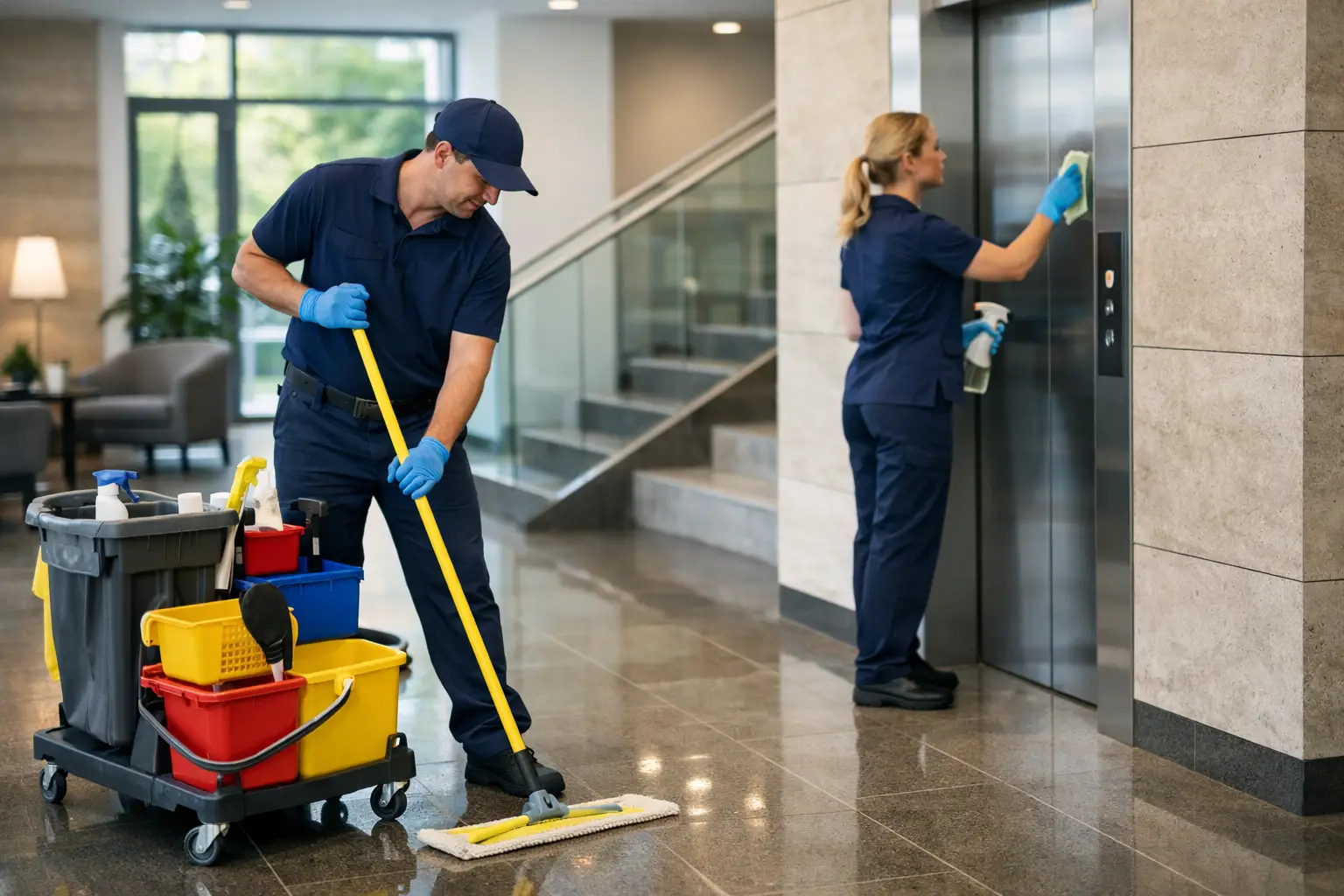
The lift mirror, foyer floor and path to the bins quietly tell residents and visitors how a building is cared for. A considered guide to strata common area cleaning starts there: not with a generic checklist, but with the understanding that shared spaces are valuable assets used by many people, every day. When care is inconsistent, small marks become a tired overall impression. When standards are deliberate, the property feels calm, safe and properly looked after.
For strata committees, property managers and owners corporations, common-area cleaning is both a practical responsibility and a statement of stewardship. The right routine preserves finishes, reduces preventable wear and gives every resident confidence when they walk through the door.
What Strata Common Area Cleaning Should Cover
A common area is any space shared by residents, tenants or visitors. Its exact scope depends on the building, but generally includes entry foyers, lifts, hallways, stairwells, mail areas, shared bathrooms, laundry rooms, bin stores, car parks and outdoor paths. In larger properties, it may also extend to gyms, meeting rooms, pool surrounds, rooftop spaces and shared gardens.
The first mistake is treating every space as though it needs the same service. A polished stone foyer has different needs from a concrete car park. High-touch lift buttons need regular sanitising, while external glass may need a less frequent but more specialised clean. A premium plan accounts for surface type, traffic levels, weather exposure and the experience the property intends to offer.
It should also distinguish between cleaning, maintenance and repairs. Removing leaf litter from a pathway is cleaning. Clearing a blocked gutter or replacing a damaged light fitting is maintenance. Identifying a loose handrail or a spill hazard is part of responsible site care, but the repair itself may require a qualified contractor. Clear boundaries prevent missed tasks and avoid assumptions between the committee, manager and service providers.
Guide to Strata Common Area Cleaning Frequencies
Frequency should follow use, not habit. A small block with six owner-occupied apartments may need a weekly foyer and stairwell service, while a busy multi-storey complex with short-term rentals may require attention several times a week. Adelaide’s dry conditions can bring dust into entryways, while winter rain can leave slips, mud and leaf debris around external access points.
Daily or high-frequency attention is usually appropriate for entry glass, lift buttons, handrails, rubbish areas and heavily used floors. Weekly work often includes vacuuming or mopping corridors, cleaning lifts, wiping skirting boards, servicing mail areas and refreshing shared amenities. Monthly or seasonal tasks may include detailed cobweb removal, high dusting, external window cleaning, pressure cleaning, garden tidying and gutter clearing.
A good routine is visible in the result, not in unnecessary labour. Over-servicing quiet areas can inflate costs without improving the resident experience. Under-servicing busy zones does the opposite. The best approach is to begin with a clear baseline, review it after the first month, then adjust according to real use and seasonal conditions.
Start With a Site-Specific Scope
Before appointing a cleaner, walk the property at the same times residents use it. Early morning reveals overnight rubbish and entrance presentation. Late afternoon shows dust, foot traffic and lift use. After rain, inspect external paths, drains and mats. This creates a practical picture of where the building’s standards are won or lost.
The scope should name each area, the expected task, the frequency and the finish standard. “Clean foyer” is too vague. “Vacuum entrance mat, mop tiled floor with a pH-appropriate product, polish lift mirror without streaks, remove fingerprints from entry glass and wipe the intercom panel” creates accountability.
It also helps to agree on what sits outside the routine. For example, graffiti removal, sharps disposal, excessive rubbish, water damage and post-trade cleaning may need a separate response. These situations are not everyday cleaning tasks, and they deserve the right equipment, safety process and approval pathway.
Match Methods to the Material
Premium cleaning protects what is already there. That means avoiding harsh chemicals on natural stone, abrasive pads on polished metal and excessive water around timber, lift thresholds or electrical points. Using the wrong product may create a fast visual improvement while quietly damaging the finish beneath it.
A careful provider assesses surfaces before setting the method. Porous tile and grout may need a different treatment from sealed porcelain. Stainless steel benefits from a residue-free product and a clean microfibre finish. Painted walls should be spot-cleaned with restraint, as aggressive rubbing can leave obvious patches. In common areas, detail is not indulgence. It is what prevents avoidable deterioration.
Hygiene, Safety and Resident Respect
Shared spaces need to look clean, but they must also support safe daily living. Handrails, intercoms, push plates, lift controls and communal taps are high-touch points. Regular cleaning and appropriate sanitising helps maintain a more hygienic environment, particularly in buildings with families, older residents or people receiving in-home supports.
Safety is equally practical. Wet floors require clear signage. Cleaning equipment should never obstruct fire exits, stairwells or accessible paths. Chemicals must be stored and used responsibly, with particular care around pets, children and residents with sensitivities. A team should be able to work quietly and respectfully around people coming and going, rather than making the building feel like a worksite.
Rubbish areas deserve special attention. They are often the first place odours, pests and frustration take hold. Regular bin-store cleaning, spill removal and deodorising can make a remarkable difference, but cleaning alone cannot resolve chronic overflow. Where bins are consistently overfilled, the committee may need to review collection schedules, signage or resident communication. Good cleaners identify the pattern; good property stewardship addresses the cause.
Build Quality Control Into the Routine
Reliability should not depend on a resident noticing something has been missed. The most effective strata cleaning plans have simple quality controls: an agreed scope, consistent attendance, clear reporting and periodic inspections. This gives managers certainty without requiring them to chase basic completion.
Ask for a process that records issues noticed during service, such as a leaking tap, damaged tile, failed globe or unsafe obstruction. Cleaning teams are often the people most regularly observing a building’s shared areas, so their observations can become an early-warning system for maintenance concerns.
Communication matters most when something changes. If access is restricted, a spill requires urgent attention or an area needs additional work after a function, the response should be clear and prompt. Residents may never see the messages behind the scenes, but they notice the result: a building that remains composed, even when the unexpected occurs.
Choosing a Strata Cleaning Partner
Price has a place in every decision, but the lowest quote can become costly when the scope is vague, attendance varies or delicate finishes are treated carelessly. A useful comparison looks beyond the headline figure. Consider whether the provider understands your specific surfaces, can adapt the schedule, carries appropriate insurance and has a clear method for reporting issues.
Look for a service that asks thoughtful questions about the property before promising a solution. How many residents use the space? Are there pets, prams, mobility aids or school-hour peak periods? Is the foyer intended to make a premium first impression? Are there sensitive stone, timber or metal finishes? These details shape the work.
For Adelaide strata properties, a tailored routine can also coordinate internal cleaning with seasonal outdoor care, from leaf management and path presentation to windows and gutters. One considered plan is often easier to manage than a patchwork of reactive call-outs.
Rosewood & Luster approaches shared spaces with this same heritage-minded precision: caring for the details that protect a property’s radiance over time. The aim is not simply a clean corridor or polished lift. It is the settled feeling residents get when every shared space reflects care, order and respect.
Leave a Reply