
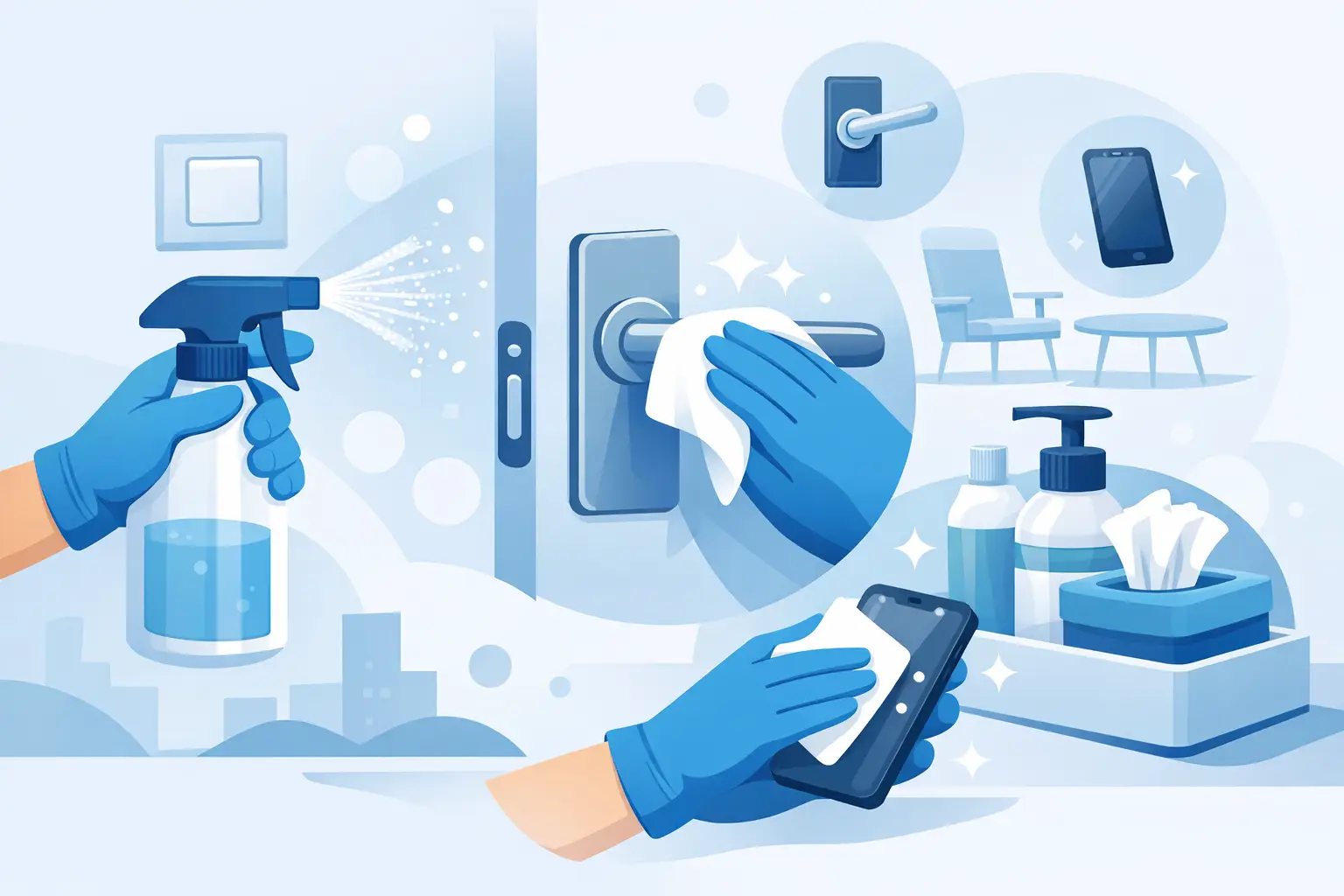
The first thing people notice about a well-kept space is not the scent or the shine. It is the feeling that everything has been thoughtfully cared for. A strong guide to high touchpoint disinfection routines starts there – with the surfaces hands meet dozens of times a day, often without anyone noticing until illness spreads or standards slip.
High-touchpoint disinfection is not about treating every room like a laboratory. It is about understanding where contact happens most often, how different settings create different risks, and how to maintain cleanliness without damaging finishes, disrupting daily life, or relying on harsh habits that wear a space down over time.
What high-touchpoint disinfection really covers
High-touch surfaces are the places people naturally reach for. Door handles, light switches, faucets, appliance pulls, elevator buttons, shared desks, remotes, stair rails, toilet flush levers, and mobile devices all sit in this category. In family homes, the list often extends to refrigerator handles, cabinet knobs, playroom surfaces, and car interiors. In offices, reception counters, meeting room tables, shared keyboards, and break room touchpoints deserve equal attention.
The mistake many people make is assuming visible cleanliness equals hygienic care. A polished countertop can still carry residue from repeated contact. On the other hand, excessive disinfecting can dull specialty finishes, dry out delicate materials, and create a cleaning routine that is hard to sustain. The right routine sits between neglect and overcorrection.
A guide to high touchpoint disinfection routines by setting
The best routine depends on how a space is used. A private home with two adults will not need the same schedule as a medical-adjacent support environment, a busy office, or a household with children moving through every room.
Residential homes
In most homes, touchpoints should be disinfected with more intention than frequency alone. Entry hardware, kitchen handles, faucets, bathroom fixtures, toilet areas, and shared remotes usually deserve daily attention if the household is active. If someone is sick, returning from travel, or managing a reduced immune response, the routine should increase accordingly.
For higher-end homes, finish protection matters. Matte cabinetry, natural stone surrounds, specialty metals, and custom woodwork can react poorly to aggressive products. In those spaces, product selection is part of the craft. A routine should disinfect effectively while preserving the character of the materials that make the home feel elevated.
Commercial spaces
In offices and shared facilities, consistency matters more than occasional intensity. Reception desks, front door hardware, conference room surfaces, restroom fixtures, copier touchscreens, and kitchen appliances should be addressed on a predictable schedule. Staff and visitors notice when these points are neglected, even if they cannot always name why the space feels poorly managed.
Commercial routines also benefit from zoning. Public-facing touchpoints often need more frequent attention than private offices. A tailored schedule protects both presentation and health standards, especially in spaces with client traffic or rotating staff.
NDIS and support-focused environments
In care-supported settings, disinfection routines carry an added layer of responsibility. The goal is not only cleanliness but confidence, comfort, and respectful support for daily living. Touchpoints in bedrooms, bathrooms, mobility aids, kitchen areas, and personal support zones should be approached carefully, with methods that are dependable and appropriate to the individual’s needs.
This is where rigid, one-size-fits-all cleaning often fails. Some clients need increased attention to shared contact surfaces. Others need quieter routines, low-residue products, or careful sequencing so the home remains calm and usable throughout the service.
How to build a routine that actually holds up
A useful guide to high touchpoint disinfection routines should be practical enough to follow on a busy Tuesday, not just during a seasonal reset. That means choosing a structure people can maintain.
Start by mapping movement, not just rooms. Ask where hands land first when people enter, cook, work, wash, sit, and leave. The answer usually reveals the true touchpoints faster than a room-by-room checklist. In many properties, the busiest surfaces are clustered around entries, kitchens, bathrooms, and shared devices.
Next, separate cleaning from disinfecting. Cleaning removes soil, grease, dust, and residue. Disinfecting reduces microorganisms on an already cleaned surface. If a surface is visibly dirty, disinfectant alone is not enough. This distinction matters because rushed routines often skip the cleaning step and then wonder why surfaces still feel sticky, streaked, or poorly maintained.
Then establish frequency based on use. Some touchpoints need daily care, some need once or twice a day in commercial or support settings, and others only need extra attention during illness, events, or heavy traffic periods. A polished routine is one that reflects the rhythm of the space rather than chasing arbitrary rules.
Product choice matters more than people think
Not every disinfectant belongs on every surface. This is especially true in homes and workplaces with premium finishes, delicate materials, electronics, or vehicles. Alcohol-heavy products may be suitable for some hard surfaces but can degrade coatings, strip protective treatments, or leave plastics looking tired over time. Strong chemicals can also create overpowering odors that make a freshly cleaned space feel clinical rather than calm.
Read surface guidance before routine use. Stone, timber, finished metals, touchscreens, leather, and specialty textiles all require more consideration. When in doubt, test discreetly and choose products designed for the material in question. The most effective routine is not the harshest one. It is the one that preserves the asset while delivering reliable hygienic results.
Dwell time is another overlooked detail. Many disinfectants need to remain visibly wet for a set period to perform as intended. Wiping them away too quickly may leave a surface smelling clean but not properly disinfected. Precision often lives in these quiet details.
The areas people miss most often
Even diligent routines tend to skip certain touchpoints. Light switches near garage entries, appliance buttons, chair arms, intercoms, alarm panels, bedside tables, and handrails often fall outside standard cleaning patterns. In vehicles, steering wheels, door pulls, gear selectors, infotainment screens, and seatbelt buckles deserve regular care, especially when the car functions as an extension of work or family life.
Builders cleans and post-project handovers also require a more watchful eye. After construction or renovation, touchpoints may carry fine dust, adhesive residue, or repeated handling from multiple trades. A space can look complete while still needing a careful reset on the surfaces people immediately begin using.
When routines should change
A disinfection plan should never be static. Illness in the household, seasonal outbreaks, a new baby, a return to school, increased office occupancy, tenant turnover, or support needs that evolve over time all justify a shift in frequency or method.
There is also a presentation factor. Before hosting guests, preparing a property for inspection, welcoming clients, or handing over a completed build, touchpoint care becomes part of the overall experience. People may not comment on a disinfected door handle, but they absolutely notice when a space feels attended to at every level.
Why tailored routines outperform generic checklists
Generic cleaning advice tends to flatten every property into the same set of tasks. In reality, a family home with custom finishes, a commercial suite with staff turnover, and a support-based residence all ask for different pacing, products, and priorities.
That is why tailored routines consistently deliver better outcomes. They reduce waste, protect materials, and keep standards steady without making the process feel intrusive. For premium environments, that balance matters. Cleanliness should support the atmosphere of the space, not overpower it.
Rosewood & Luster approaches this work with that exact mindset – disinfection is part of stewardship, not just maintenance. The goal is to preserve confidence in the spaces people live in, work in, and rely on every day.
A good routine does more than remove what should not be there. It protects the quiet comfort of reaching for a handle, a switch, or a seat and trusting that care has already gone ahead of you.
Leave a Reply