
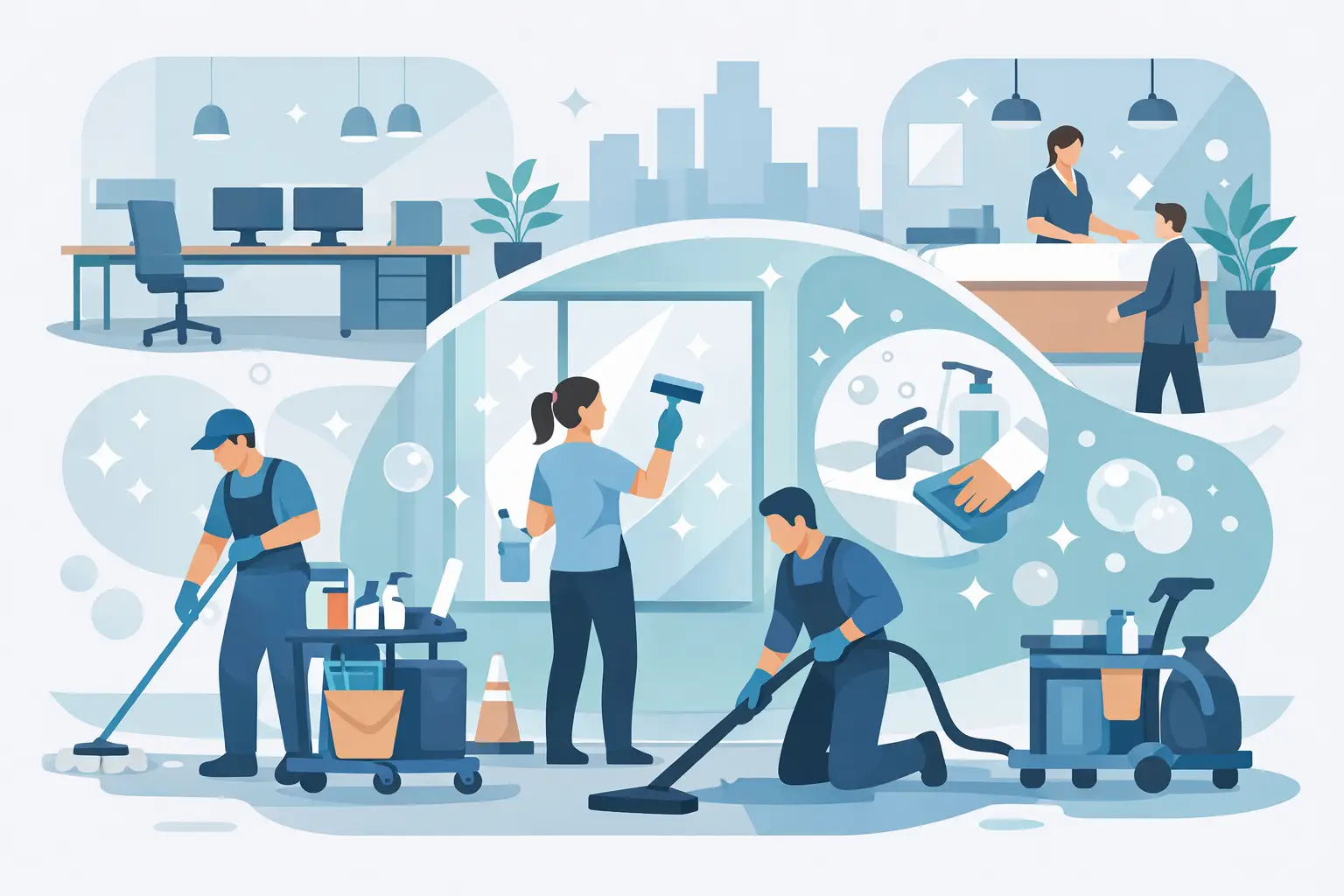
A clean office is easy to notice when it is missing. Smudged glass, dusty vents, stained restrooms, and neglected floors change how a workplace feels long before anyone says a word. So when clients ask what does commercial cleaning include, they are usually asking something deeper – what level of care can we expect, and will it protect the standard of our space over time?
The answer depends on the building, the traffic, and the finish level you want to maintain. Commercial cleaning is not one task or one room. It is a structured service that supports presentation, hygiene, and daily function across the whole workplace. At its best, it is not reactive. It is planned, consistent, and tailored to the way your business actually operates.
What does commercial cleaning include in most workplaces?
In most commercial settings, cleaning begins with the visible, high-use areas that shape first impressions and day-to-day comfort. Reception areas, workstations, meeting rooms, kitchens, and restrooms are usually part of the routine scope. These are the spaces where dust settles quickly, fingerprints build up, trash accumulates, and surfaces need regular sanitizing.
A standard commercial cleaning visit often includes vacuuming carpets, mopping hard floors, wiping desks and shared surfaces, emptying trash and replacing liners, cleaning restroom fixtures, restocking consumables if arranged, and tidying break areas. Glass entry doors, light switches, and touchpoints may also be cleaned on a recurring basis, especially in busier environments.
That said, standard does not always mean sufficient. A small professional suite has very different needs than a medical-adjacent office, childcare environment, retail showroom, or strata common area. The scope should reflect the building, not force every workplace into the same checklist.
Core areas usually covered
Office cleaning is usually the backbone of commercial service. This includes dust removal from horizontal surfaces, attention to phones and monitors where appropriate, spot cleaning marks from walls or partitions, and keeping boardrooms and shared spaces presentable between heavy use. In premium environments, the expectation is not simply that the room looks passable. It should feel orderly, calm, and ready for the next person who walks in.
Restroom cleaning is another essential part of the scope. Toilets, sinks, mirrors, dispensers, counters, and floors need thorough care, and frequency matters. A restroom cleaned once a week may be adequate in a low-traffic site, but it will not hold its standard in a busy office or client-facing premises. This is where tailored scheduling matters more than broad promises.
Kitchenettes and staff break rooms are often underestimated. Yet they collect spills, crumbs, grease, fingerprints, and odors quickly. Commercial cleaning in these spaces typically includes wiping counters, cleaning sinks and exterior appliance surfaces, sanitizing tables, and mopping floors. If the area is heavily used, deeper refrigerator or microwave cleaning may be added as a periodic task rather than a daily one.
Floor care is one of the clearest markers of service quality. Carpets may need regular vacuuming and occasional deep extraction. Hard floors often require sweeping, mopping, edge work, and sometimes machine scrubbing or polishing depending on the material. Good floor care is not just cosmetic. It helps preserve the finish, reduce wear patterns, and extend the life of the asset.
What is often included beyond basic cleaning?
This is where the quality of a provider becomes easier to measure. Many businesses assume commercial cleaning stops at emptying bins and wiping obvious surfaces. In practice, a more complete service may include internal glass cleaning, detail work around skirting boards, dusting vents and ledges, disinfecting high-touch areas, and managing buildup in corners, entry thresholds, and under furniture.
Some providers also include consumable checks, such as notifying clients when soap, paper products, or hygiene supplies are running low. Others will handle supply restocking directly. This is not glamorous work, but it is part of maintaining a workplace that runs without friction.
A premium service may also take greater care with materials and finishes. Stone surfaces, specialty flooring, timber accents, brushed metal fixtures, and delicate furnishings all require the right method. The wrong chemical or too much moisture can create damage that is expensive to reverse. Care matters most when no one notices it – because the finish remains intact.
What commercial cleaning does not always include
One of the most common points of confusion is assuming every cleaning company covers every task automatically. They do not. Deep carpet cleaning, exterior window cleaning, pressure washing, post-construction cleanup, high dusting, upholstery care, and handyman-style maintenance are often separate services or scheduled as periodic add-ons.
This is not a problem by itself, as long as the scope is clear from the beginning. Trouble starts when a client expects detailed edge work or specialist floor treatment but receives only a surface-level routine. Commercial cleaning should be defined in writing with enough detail that both sides understand the standard being maintained.
It is also worth asking whether after-hours access, alarm procedures, secure areas, and compliance requirements affect the service. In some workplaces, the cleaning itself is straightforward, but the operational demands around it are not. Reliability matters as much as technique.
How frequency changes what is included
If you are comparing proposals, remember that frequency shapes the scope. A five-night-per-week service will divide tasks differently than a once-weekly visit. Daily cleaning often focuses on hygiene, presentation, trash removal, touchpoints, and floor upkeep. Weekly or fortnightly schedules may need more intensive bathroom work, deeper dusting, and more obvious reset tasks because buildup has had longer to settle.
Periodic work should also be part of the conversation. Even a beautifully maintained office benefits from quarterly or seasonal attention to carpets, windows, upholstery, and overlooked details. Routine care keeps a site looking clean. Periodic care is what keeps it from slowly losing its finish.
What to expect from a tailored commercial cleaning plan
The best answer to what does commercial cleaning include is this: the right things, at the right frequency, for the way your building is used. That usually starts with a walkthrough and a practical discussion about traffic, access, sensitive finishes, expectations, and budget.
A tailored plan should identify daily, weekly, and periodic tasks. It should also separate essential hygiene work from presentation-focused detailing, so you can decide where a higher finish level matters most. For some businesses, immaculate client-facing areas are the priority. For others, staff amenities, washrooms, and health-conscious cleaning protocols come first.
A good provider will also talk honestly about trade-offs. If the budget supports only limited visits, some tasks may rotate rather than happen every time. If your space has premium materials or a hospitality-style standard, a low-frequency plan may save money upfront but cost more later in wear, complaints, or reduced presentation.
Signs of a higher standard of commercial cleaning
A polished workplace is not defined by fragrance or shine alone. The real signs are quieter. Corners are not carrying dust. Glass is clear without streaking. Restrooms remain fresh late into the day. Floors are consistently cared for, not just quickly passed over. Shared spaces feel settled and ready for use.
There is also a difference in how the work is approached. Higher-standard commercial cleaning protects surfaces rather than treating every material the same. It follows a routine, but it also notices what changed since the last visit. A spill near reception, hand marks on the entry, dust collecting around vents, or wear beginning on a floor finish should not need to become a complaint before it is addressed.
For businesses that care about reputation, this level of attentiveness is not indulgent. It is practical. Clients, staff, and tenants all respond to the atmosphere of a well-kept space, even if they never comment on the cleaning directly.
Choosing the right scope for your site
Before hiring a provider, ask for a clear service map. Which rooms are covered? Which surfaces are sanitized, dusted, or spot cleaned? Are internal glass, baseboards, kitchens, and touchpoints included every visit or only periodically? Are supplies part of the arrangement? What happens if your needs change with staffing, tenancy, or season?
This clarity is especially valuable for offices, shared commercial premises, and managed properties where expectations come from multiple stakeholders. A vague scope often leads to inconsistent outcomes. A defined plan creates accountability and steadier results.
For businesses that want a more considered standard of care, commercial cleaning should feel like stewardship, not a rushed reset. That is the difference between simply making a workplace look acceptable and preserving the calm, professionalism, and polish people remember.
If you are reviewing your current service, look beyond what gets cleaned today and ask what standard is being maintained over the next year. That is where the real value of commercial cleaning begins.
Leave a Reply