
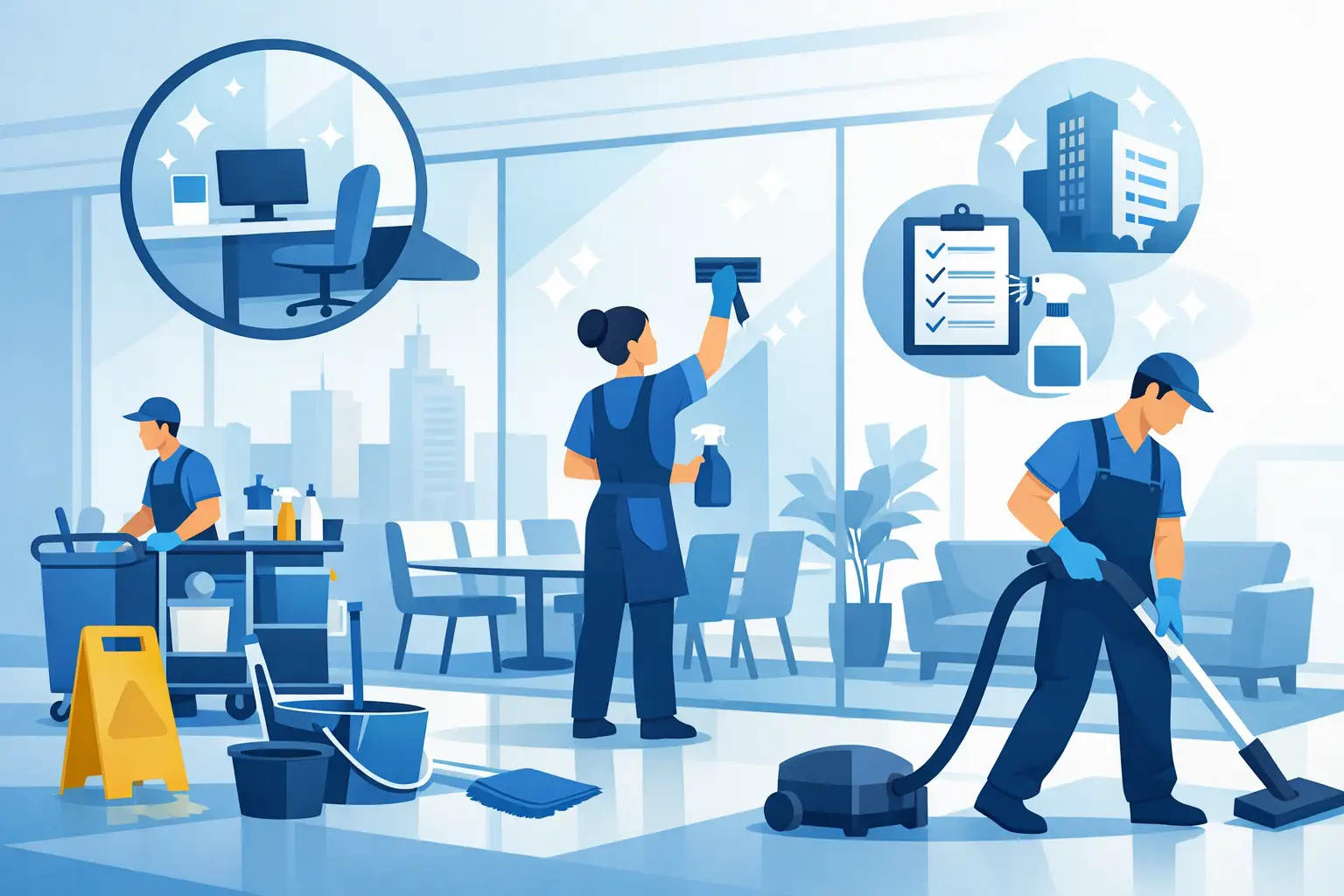
A polished lobby can still hide a weak cleaning program. Smudged glass at eye level, dust along baseboards, neglected touchpoints, and harsh products on premium finishes all signal the same problem – the work is being done, but the scope is not defined well enough. This guide to premium commercial cleaning scope is for business owners, office managers, and property stakeholders who need more than a basic checklist. They need a standard that protects the space, supports the people using it, and holds up over time.
Premium commercial cleaning is not simply more frequent cleaning or a higher invoice. It is a more thoughtful scope. The difference lies in what gets cleaned, how it gets cleaned, when it gets cleaned, and what standard the result must meet. In a quality workplace, cleaning is part presentation, part asset care, and part daily operations.
What a premium commercial cleaning scope actually covers
At a basic level, a cleaning scope defines the services included in an agreement. In a premium setting, that definition needs more precision. It should map surfaces, usage patterns, traffic intensity, hygiene expectations, and material sensitivity. An office with stone floors, brass fixtures, glass partitions, and client-facing meeting rooms cannot be cleaned the same way as a low-traffic back-office space.
A strong scope begins with zones. Entryways, reception, workstations, kitchens, restrooms, meeting rooms, elevators, stairwells, and exterior touchpoints each have different demands. The premium approach treats these zones according to how they function, not as one flat square-foot number.
That distinction matters because premium spaces are judged by consistency. People notice the fingerprints on the boardroom glass, the dust collecting around vents, the water marks near faucets, and the condition of finishes over time. If the scope only names broad tasks like vacuuming, mopping, and restroom cleaning, important details will be left to interpretation. That is usually where service quality begins to drift.
A guide to premium commercial cleaning scope by service area
The easiest way to build a useful scope is to think in service layers rather than one master checklist. Daily presentation cleaning forms the foundation. This includes visible order, floor care, waste removal, restroom sanitation, kitchen reset, and high-touch disinfection where appropriate. These are the tasks that shape first impressions and everyday comfort.
The second layer is detail work. This is where premium service separates itself. Detail work includes edge vacuuming, spot cleaning walls and partitions, polishing fixtures correctly, removing buildup from corners and grout lines, and addressing the glass, trim, and joinery that standard programs often skip. These tasks may not be required every visit, but they should be scheduled intentionally.
The third layer is finish protection. Many commercial spaces invest heavily in flooring, millwork, upholstery, specialty surfaces, and decorative elements. A premium cleaning scope should specify safe methods and suitable products for each material. The wrong chemical on natural stone or coated wood can cause damage that costs far more than the cleaning program itself.
The fourth layer is periodic maintenance. Carpets, windows, upholstery, vents, hard-floor treatment, and high dusting all sit here. They are easy to postpone because they do not always affect the room immediately. Still, they shape the long-term feel of the environment. A workplace that looks acceptable at first glance but tired up close usually has a weak periodic maintenance plan.
The elements that should appear in the scope document
A premium scope should be written clearly enough that both the client and the cleaning team can point to the same standard. Frequency comes first. Some tasks need daily attention, others weekly, monthly, quarterly, or seasonally. Without frequency, a task listed in the scope may still be missed.
Performance standards matter just as much. It helps to define expected outcomes in plain language. Glass should be free of visible smears at normal viewing distance. Restrooms should be sanitized, stocked, and free of odor. Floors should be clean at edges, not only in open walking paths. This reduces ambiguity and creates accountability.
Time-of-service expectations should also be addressed. Some businesses need discreet after-hours work. Others need day porter support to maintain washrooms, meeting spaces, and common areas during operating hours. Premium cleaning often involves both, especially in client-facing environments.
Access, security, and communication protocols belong in the scope as well. If a service provider is working around confidential offices, alarm systems, or sensitive materials, those expectations should not sit outside the agreement. For many commercial clients, trust is part of the premium standard.
How premium scope changes by property type
Not every commercial property needs the same level of detail in the same places. Corporate offices often prioritize presentation, workstation hygiene, restrooms, and meeting rooms. Medical-adjacent spaces may place greater emphasis on sanitization protocols and cross-contamination controls. Retail environments care deeply about glass, floors, fitting areas, and entry presentation.
Multi-tenant properties add another layer. Shared spaces such as lobbies, elevators, corridors, and restrooms must feel consistently cared for, even when individual tenancies have different expectations. In those settings, a scope needs to separate base-building responsibilities from tenant-specific routines.
Industrial and warehouse-adjacent offices can be especially tricky. Dust transfer, heavier foot traffic, and mixed-use areas create a different cleaning pattern than a corporate suite. A premium scope here does not mean making the site feel delicate. It means designing a routine that respects how the environment actually works.
Where under-scoping creates the biggest problems
Most cleaning disappointments do not come from one dramatic failure. They come from scope gaps. Touchpoints are forgotten because they were assumed, not named. Premium surfaces dull because no one documented the right care method. Kitchens smell clean at first but accumulate residue in hidden areas because rotational tasks were never assigned.
Under-scoping also creates staffing mismatches. If the agreement is priced like a basic clean but the client expects concierge-level presentation, the service team is set up to rush. That affects not only quality but care. Fine finishes, specialty materials, and high-traffic zones need enough labor time to be handled properly.
There is also a financial trade-off. A lean scope may look efficient on paper, but it often shifts cost into premature wear, reactive callouts, tenant complaints, and avoidable deep cleans. Premium cleaning is rarely the cheapest option in the short term. It is often the calmer and more economical one over the life of the property.
How to evaluate a premium commercial cleaning scope
If you are reviewing a proposal, read past the task list. Ask whether the scope reflects your actual environment. Does it identify high-visibility zones, touchpoints, premium materials, and traffic patterns? Does it show what happens daily versus periodically? Does it explain how the provider will preserve finishes, not just clean them?
It is also worth looking at what is excluded. Some proposals appear comprehensive until you notice that internal glass, consumables, high dusting, appliance cleaning, or floor treatment sit outside the base plan. Exclusions are not necessarily a problem, but they should be deliberate and understood.
Communication structure is another marker of quality. Premium service usually includes site-specific notes, regular reviews, and room to adjust the plan as seasons, staffing, or occupancy change. A static scope rarely serves a living workplace well.
For businesses in Adelaide with a high standard for presentation and care, this is where a tailored provider earns its place. Rosewood & Luster, for example, approaches scope as a form of stewardship – protecting the finish, rhythm, and feel of a space rather than treating cleaning as a generic commodity.
Why the best premium scopes feel tailored, not inflated
There is a difference between a premium scope and an oversized one. More tasks do not automatically mean better service. A well-built scope is selective. It invests effort where appearance, hygiene, durability, and user experience matter most.
That might mean increasing restroom touchpoint service during peak occupancy while reducing low-value repetition in rarely used areas. It might mean scheduling specialist care for stone, glass, or upholstered furnishings rather than applying aggressive all-purpose methods everywhere. Premium is not excess. It is precision.
The best scopes also leave room for judgment. Seasons change. Weather affects entryways. Events increase traffic. Construction nearby can alter dust levels overnight. A premium provider should work from a clear scope but still respond with care and intelligence when the space demands it.
A commercial cleaning program should make the workplace feel steady. Staff should arrive to order, clients should see care in the details, and the property itself should hold its finish with grace. When the scope is built properly, cleaning stops feeling like a background frustration and starts supporting the standard you want the space to carry every day.
Leave a Reply